
President Donald Trump’s principled effort to achieve a last peace with the Islamic Republic of Iran and a conclusion to the war to end to the Muslim nation’s nuclear weapons program appears to be on the rocks, as the official signing ceremony in Switzerland has been called off.
The much-touted signing of the U.S.-Iran deal in Switzerland has been cancelled and Vice President J.D. Vance’s office announced he would not be traveling to the picturesque town of Bürgenstock for the meeting. The Swiss Foreign Ministry confirmed the Friday peace talks had been postponed, with no new date given.
The UK’s Guardian newspaper reported the cancellation of the talks between Iran and the US on Friday came so abruptly, that Vance’s staff and a small pack of journalists had even gathered at Joint Base Andrews outside Washington in anticipation of the trip. Dozens of White House officials, advance staffers and media were already in Switzerland to prepare for Vance’s anticipated arrival.
Iran's foreign ministry had cast doubt on the planned meeting, calling it unnecessary after both countries' presidents signed the pact and had demanded immediate action on some of the points agreed in the much-criticized Memorandum of Understanding (MOU).
Before the talks were cancelled, Iran’s semi-official Tasnim news agency said that Iranian negotiators needed to see signs of implementation of the interim agreement from the US before the next rounds of peace talks could begin, and that there was no confirmation that its delegation would travel to Switzerland.
While a Japanese oil tanker successfully navigated the much-contested Strait of Hormuz, and three Saudi oil tankers left the Gulf through the strait on Thursday, as did a French vessel loaded with liquefied natural gas, indicating Iran had stopped attempting to interdict traffic as called for in the MOU, elsewhere the conflicted raged on.
Iran’s Shia Muslim proxy militia Hezbollah killed four Israeli soldiers in Lebanon and Israel carried out a wave of retaliatory airstrikes in south Lebanon and the Hezbollah-infested Bekaa valley.
The killing of Israeli soldiers prompted fury within Israel, with the national security minister, Itamar Ben-Gvir, calling for scorched earth in Lebanon.
Hezbollah targeted Israeli forces near the city of Nabatieh, south Lebanon, with several salvoes of rocket fire and drones overnight on Friday after intermittent Israeli shelling throughout the day. Israel responded with a wave of airstrikes on the city and surrounding towns on what it said were Hezbollah targets.
The cancellation of the talks came after a report from Al Mayadeen, an Arabic language network that is politically allied with the Iranian-backed Lebanese armed group Hezbollah, that said Tehran was delaying sending its delegation to Switzerland owing to the ongoing hostilities in Lebanon, although which side – Israel or Hezbollah – is responsible for the renewed fighting is open for debate.
The meeting in Switzerland between the US, Iran, Qatar and Pakistan was to begin the 60-day technical negotiation period on the most important details of the deal – namely the elimination of Iran’s nuclear weapons program.
However, the deal also calls for the “permanent termination” of the war in Lebanon, but Israel, which was not a party to negotiating the MOU, has said it has no intention of withdrawing, instead depicting an expanded occupation zone in a new map.
The agreement, which has been signed separately by President Donald Trump and his Iranian counterpart Masoud Pezeshkian, appears to also have at least the acquiescence of Iran’s top cleric.
Iran’s supreme leader Ayatollah Mojtaba Khamenei said Thursday that he had approved the accord, despite reservations, as the United States lifted a blockade of Iranian ports.
Mojtaba Khamenei, who took over after his father and longstanding ruler Ali Khamenei was killed in an airstrike on the first day of the war on February 28, said in a written statement that he held a “different view” on the deal, without elaborating.
“But I issued my permission due to the commitment” made by officials including Pezeshkian to “protect the rights of the Iranian nation.”
“Face-to-face negotiations” with the United States will be held in the future, but that does not “mean accepting the enemy’s point of view,” he added according to reporting by our sources in the Middle East.
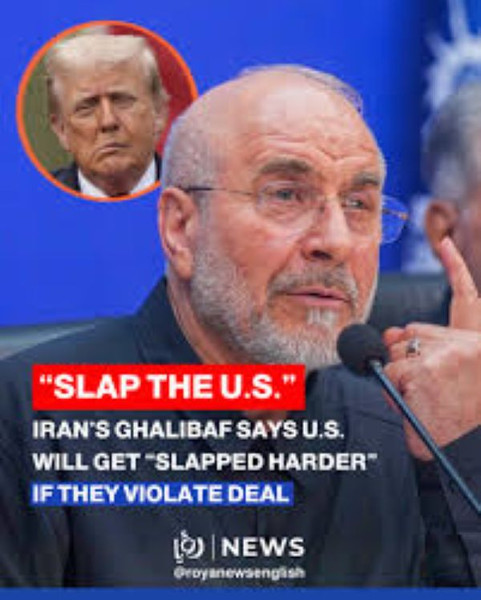
Iran's top negotiator and Parliament Speaker Mohammad Bagher Ghalibaf said Tehran remains committed to implementing the conditions laid down by Supreme Leader Ayatollah Mojtaba Khamenei but warned that any perceived breach by the United States would trigger a strong response.
In a post on X, Ghalibaf wrote, "We are at your command; the task assigned to us by the Supreme Leader is to pursue the realisation of the conditions and clauses of the agreement. In the event of bad faith, breach of contract, and excessive demands by the opposing side, we have no hesitation in delivering a crushing response to the enemy."
Escalating his rhetoric further, he added, "They were once slapped during the war; if they wish to tread that path again, they will receive an even harder slap."
And therein lies the problem for President Trump.
The parties to the treaty or agreement, which President Trump has characterized as an “unconditional surrender,” must accept the American point of view for it to have any effect. A document, the terms of which are still in dispute, is not a “deal,” let alone an unconditional surrender.
Still need more information on the Iran threat? Go to our article “Does Iran ‘Deal’ Snatch Strategic Defeat From Tactical Victory?” for more information explaining why the President should abandon the deal outlined in the MOU.
We urge all CHQ readers and friends to share this important information widely. Forward this message to your family, friends, neighbors, church and civic club mailing lists and encourage them to sign this letter opposing the deal and call the White House comment line (202) 456-1111 to urge the President to abandon this terrible deal that the Islamic Republic of Iran clearly has no intention of honoring.
The much-touted signing of the U.S.-Iran deal in Switzerland has been cancelled and Vice President J.D. Vance’s office announced he would not be traveling to the picturesque town of Bürgenstock for the meeting. The Swiss Foreign Ministry confirmed the Friday peace talks had been postponed, with no new date given.
The UK’s Guardian newspaper reported the cancellation of the talks between Iran and the US on Friday came so abruptly, that Vance’s staff and a small pack of journalists had even gathered at Joint Base Andrews outside Washington in anticipation of the trip. Dozens of White House officials, advance staffers and media were already in Switzerland to prepare for Vance’s anticipated arrival.
Iran's foreign ministry had cast doubt on the planned meeting, calling it unnecessary after both countries' presidents signed the pact and had demanded immediate action on some of the points agreed in the much-criticized Memorandum of Understanding (MOU).
Before the talks were cancelled, Iran’s semi-official Tasnim news agency said that Iranian negotiators needed to see signs of implementation of the interim agreement from the US before the next rounds of peace talks could begin, and that there was no confirmation that its delegation would travel to Switzerland.
While a Japanese oil tanker successfully navigated the much-contested Strait of Hormuz, and three Saudi oil tankers left the Gulf through the strait on Thursday, as did a French vessel loaded with liquefied natural gas, indicating Iran had stopped attempting to interdict traffic as called for in the MOU, elsewhere the conflicted raged on.
Iran’s Shia Muslim proxy militia Hezbollah killed four Israeli soldiers in Lebanon and Israel carried out a wave of retaliatory airstrikes in south Lebanon and the Hezbollah-infested Bekaa valley.
The killing of Israeli soldiers prompted fury within Israel, with the national security minister, Itamar Ben-Gvir, calling for scorched earth in Lebanon.
Hezbollah targeted Israeli forces near the city of Nabatieh, south Lebanon, with several salvoes of rocket fire and drones overnight on Friday after intermittent Israeli shelling throughout the day. Israel responded with a wave of airstrikes on the city and surrounding towns on what it said were Hezbollah targets.
The cancellation of the talks came after a report from Al Mayadeen, an Arabic language network that is politically allied with the Iranian-backed Lebanese armed group Hezbollah, that said Tehran was delaying sending its delegation to Switzerland owing to the ongoing hostilities in Lebanon, although which side – Israel or Hezbollah – is responsible for the renewed fighting is open for debate.
The meeting in Switzerland between the US, Iran, Qatar and Pakistan was to begin the 60-day technical negotiation period on the most important details of the deal – namely the elimination of Iran’s nuclear weapons program.
However, the deal also calls for the “permanent termination” of the war in Lebanon, but Israel, which was not a party to negotiating the MOU, has said it has no intention of withdrawing, instead depicting an expanded occupation zone in a new map.
The agreement, which has been signed separately by President Donald Trump and his Iranian counterpart Masoud Pezeshkian, appears to also have at least the acquiescence of Iran’s top cleric.
Iran’s supreme leader Ayatollah Mojtaba Khamenei said Thursday that he had approved the accord, despite reservations, as the United States lifted a blockade of Iranian ports.
Mojtaba Khamenei, who took over after his father and longstanding ruler Ali Khamenei was killed in an airstrike on the first day of the war on February 28, said in a written statement that he held a “different view” on the deal, without elaborating.
“But I issued my permission due to the commitment” made by officials including Pezeshkian to “protect the rights of the Iranian nation.”
“Face-to-face negotiations” with the United States will be held in the future, but that does not “mean accepting the enemy’s point of view,” he added according to reporting by our sources in the Middle East.
Iran's top negotiator and Parliament Speaker Mohammad Bagher Ghalibaf said Tehran remains committed to implementing the conditions laid down by Supreme Leader Ayatollah Mojtaba Khamenei but warned that any perceived breach by the United States would trigger a strong response.
In a post on X, Ghalibaf wrote, "We are at your command; the task assigned to us by the Supreme Leader is to pursue the realisation of the conditions and clauses of the agreement. In the event of bad faith, breach of contract, and excessive demands by the opposing side, we have no hesitation in delivering a crushing response to the enemy."
Escalating his rhetoric further, he added, "They were once slapped during the war; if they wish to tread that path again, they will receive an even harder slap."
And therein lies the problem for President Trump.
The parties to the treaty or agreement, which President Trump has characterized as an “unconditional surrender,” must accept the American point of view for it to have any effect. A document, the terms of which are still in dispute, is not a “deal,” let alone an unconditional surrender.
Still need more information on the Iran threat? Go to our article “Does Iran ‘Deal’ Snatch Strategic Defeat From Tactical Victory?” for more information explaining why the President should abandon the deal outlined in the MOU.
We urge all CHQ readers and friends to share this important information widely. Forward this message to your family, friends, neighbors, church and civic club mailing lists and encourage them to sign this letter opposing the deal and call the White House comment line (202) 456-1111 to urge the President to abandon this terrible deal that the Islamic Republic of Iran clearly has no intention of honoring.