
Siding with a Christian counselor in Colorado, the U.S. Supreme Court on Tuesday tossed out the state's law banning conversion therapy. According to reporting by NPR, the decision could well invalidate laws in some two dozen other states — laws that bar mental health therapists from practicing a version of talk therapy that seeks to direct people, especially teenagers, who are suffering from sexual orientation confusion to embrace their natural biological sex.
Conversion therapy is generally defined as a treatment used to change a person's attraction to individuals of the same sex or to cure gender dysphoria.
On Tuesday the court delivered a major victory to therapist Kaley Chiles, who denies that her services are coercive and says clients come to her voluntarily.
Chiles challenged the Colorado law, contending that it violated her First Amendment right of free speech by subjecting her to possible punishment for using talk therapy to help teenage minors struggling with their sexual orientation or gender dysphoria.
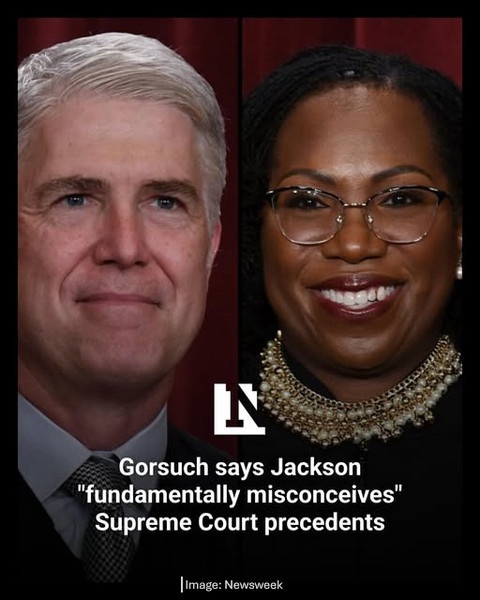
By an 8-to-1 vote, the Supreme Court agreed with her. Writing for the court majority, Justice Neil Gorsuch said that the Colorado law, as applied to Chiles, impermissibly regulated her speech by forbidding her from doing anything in her counseling that attempts to change a client's sexual orientation or gender identity.
"I'm grateful that my speech is protected," Chiles said after the ruling. "But I'm even more excited that families and children seeking access to counselling that respects biological reality will be able to get the help that they need."
Amy Howe, reporting for SCOTUSblog observed the majority rejected the state’s contention that the conversion therapy ban targets conduct or medical treatments, rather than speech, and therefore should be subject to a more deferential standard of review. Although the ban “may address conduct—such as aversive physical interventions” – Gorsuch wrote, Chiles “seeks to engage only in speech, and as applied to her the law regulates what she may say,” as well as “what views she may and may not express.” “Colorado,” Gorsuch concluded, “does not regulate speech incident to conduct; it regulates ‘speech as speech.’”
The Supreme Court, Gorsuch observed, “has long held that laws regulating speech based on its subject matter or ‘communicative content’ are ‘presumptively unconstitutional’” and therefore trigger strict scrutiny, which requires the government to show that a restriction on speech is narrowly tailored to serve a compelling government interest. “Under that test,” Gorsuch added, “it is ‘“rare that a regulation . . . will ever be permissible.”’”
The court has also acknowledged, Gorsuch continued, “the even greater dangers associated with regulations that discriminate based on the speaker’s point of view. When the government seeks not just to restrict speech based on its subject matter, but also seeks to dictate what particular ‘opinion or perspective’ individuals may express on that subject, ‘the violation of the First Amendment is all the more blatant,’” Gorsuch stressed. “’Viewpoint discrimination,’” Gorsuch said, “represents ‘an egregious form’ of content regulation, and governments in this country must nearly always ‘abstain’ from it.”
Justice Elena Kagan joined the Gorsuch opinion, but she also penned a four-page concurring opinion that was joined by Justice Sonia Sotomayor. She called Chiles’ case a “textbook” example of viewpoint discrimination. A law that was the “mirror image of Colorado’s” – by prohibiting therapy affirming a young person’s sexual orientation or gender identity – would raise the same First Amendment concerns, Kagan said.
Kagan suggested, however, that “if Colorado had instead enacted a content-based but viewpoint-neutral law, it would raise a different and more difficult question.”
But Justice Jackson was having none of it.
"No one directly disputes that Colorado has the power to regulate the medical treatments that state-licensed professionals provide to patients," she said, adding, "So, in my view, it cannot also be the case that Colorado's decision to restrict a dangerous therapy modality that, incidentally, involves provider speech is presumptively unconstitutional."
In concluding otherwise, she said, the court's opinion "misreads our precedents, is unprincipled and unworkable, and will eventually prove untenable for those who rely upon the long-recognized responsibility of States to regulate the medical profession for the protection of public health."
"To illustrate the total absurdity of Justice Jackson, she ruled last year that states “do not” have the right to ban child sex changes, but ruled today that states “do” have the right to ban counselors from telling boys they are not girls." She doesn't belong on the court, charged Congressman Brandon Gill, and he’s right.
A more charitable view might blame Jackson’s dissent on her cadre of Far Left clerks or a particular beef with one aspect of the majority opinion, but Jackson’s embrace of state power to ban speech was so out there even the two other liberal justices didn’t buy it.
We are left to conclude that Justice Jackson is just plain too dumb to grasp that once government goes down the path of banning the content of speech it represents, as Justice Gorsuch wrote, ‘an egregious form of content discrimination’ where First Amendment concerns are at their most ‘blatant.’
Conversion therapy is generally defined as a treatment used to change a person's attraction to individuals of the same sex or to cure gender dysphoria.
On Tuesday the court delivered a major victory to therapist Kaley Chiles, who denies that her services are coercive and says clients come to her voluntarily.
Chiles challenged the Colorado law, contending that it violated her First Amendment right of free speech by subjecting her to possible punishment for using talk therapy to help teenage minors struggling with their sexual orientation or gender dysphoria.
By an 8-to-1 vote, the Supreme Court agreed with her. Writing for the court majority, Justice Neil Gorsuch said that the Colorado law, as applied to Chiles, impermissibly regulated her speech by forbidding her from doing anything in her counseling that attempts to change a client's sexual orientation or gender identity.
"I'm grateful that my speech is protected," Chiles said after the ruling. "But I'm even more excited that families and children seeking access to counselling that respects biological reality will be able to get the help that they need."
Amy Howe, reporting for SCOTUSblog observed the majority rejected the state’s contention that the conversion therapy ban targets conduct or medical treatments, rather than speech, and therefore should be subject to a more deferential standard of review. Although the ban “may address conduct—such as aversive physical interventions” – Gorsuch wrote, Chiles “seeks to engage only in speech, and as applied to her the law regulates what she may say,” as well as “what views she may and may not express.” “Colorado,” Gorsuch concluded, “does not regulate speech incident to conduct; it regulates ‘speech as speech.’”
The Supreme Court, Gorsuch observed, “has long held that laws regulating speech based on its subject matter or ‘communicative content’ are ‘presumptively unconstitutional’” and therefore trigger strict scrutiny, which requires the government to show that a restriction on speech is narrowly tailored to serve a compelling government interest. “Under that test,” Gorsuch added, “it is ‘“rare that a regulation . . . will ever be permissible.”’”
The court has also acknowledged, Gorsuch continued, “the even greater dangers associated with regulations that discriminate based on the speaker’s point of view. When the government seeks not just to restrict speech based on its subject matter, but also seeks to dictate what particular ‘opinion or perspective’ individuals may express on that subject, ‘the violation of the First Amendment is all the more blatant,’” Gorsuch stressed. “’Viewpoint discrimination,’” Gorsuch said, “represents ‘an egregious form’ of content regulation, and governments in this country must nearly always ‘abstain’ from it.”
Justice Elena Kagan joined the Gorsuch opinion, but she also penned a four-page concurring opinion that was joined by Justice Sonia Sotomayor. She called Chiles’ case a “textbook” example of viewpoint discrimination. A law that was the “mirror image of Colorado’s” – by prohibiting therapy affirming a young person’s sexual orientation or gender identity – would raise the same First Amendment concerns, Kagan said.
Kagan suggested, however, that “if Colorado had instead enacted a content-based but viewpoint-neutral law, it would raise a different and more difficult question.”
But Justice Jackson was having none of it.
"No one directly disputes that Colorado has the power to regulate the medical treatments that state-licensed professionals provide to patients," she said, adding, "So, in my view, it cannot also be the case that Colorado's decision to restrict a dangerous therapy modality that, incidentally, involves provider speech is presumptively unconstitutional."
In concluding otherwise, she said, the court's opinion "misreads our precedents, is unprincipled and unworkable, and will eventually prove untenable for those who rely upon the long-recognized responsibility of States to regulate the medical profession for the protection of public health."
"To illustrate the total absurdity of Justice Jackson, she ruled last year that states “do not” have the right to ban child sex changes, but ruled today that states “do” have the right to ban counselors from telling boys they are not girls." She doesn't belong on the court, charged Congressman Brandon Gill, and he’s right.
A more charitable view might blame Jackson’s dissent on her cadre of Far Left clerks or a particular beef with one aspect of the majority opinion, but Jackson’s embrace of state power to ban speech was so out there even the two other liberal justices didn’t buy it.
We are left to conclude that Justice Jackson is just plain too dumb to grasp that once government goes down the path of banning the content of speech it represents, as Justice Gorsuch wrote, ‘an egregious form of content discrimination’ where First Amendment concerns are at their most ‘blatant.’