
In 21st Century America Memorial Day has become something its post-Civil War founders and early observers would not recognize.
They certainly would not recognize it in its commercialization as a three-day-long mattress sale or as the unofficial beginning of summer and an excuse to sell beer and cook hot dogs and ribs.
Nor would they recognize it as a celebration of militarism and the neo con version of patriotism – which it often seems to have become.
In 1868, John A. Logan, Commander in Chief of the Grand Army of the Republic (a fraternal organization for Union veterans) issued “General Order Number 11,” designating May 30 as a memorial day, to be set aside "for the purpose of strewing with flowers or otherwise decorating the graves of comrades who died in defense of their country during the late rebellion, and whose bodies now lie in almost every city, village, and hamlet churchyard in the land."
In 1866, just a year after the end of the American Civil War, the Ladies Memorial Association of Columbus, Georgia passed a resolution to set aside one day annually to memorialize the Confederate dead, and even today throughout the South “Confederate Memorial Day” is observed as a state holiday with many government offices and businesses closed.
The common denominator in the establishment of these observances, because holiday is really not the right word to convey their intent, is the recognition of the death of over 600,000 Americans – the Civil War’s terrible cost that was reckoned-up in “almost every city, village, and hamlet churchyard in the land."
Today, that terrible cost is rarely given any specific public acknowledgement. It seems somehow quaintly Victorian to dwell on war’s ultimate byproduct: Death.
And of course acknowledging that when politicians decide to go to war that death ensues for many of those they send certainly puts a damper on the summer picnic.
But those who established Memorial Day knew war’s terrible cost intimately and, while they held to the justness of their respective causes, they were firm in their resolve that the deaths of those hundreds of thousands lost in the Civil War should not be forgotten.
In his May 30, 1868 Memorial Day address at Arlington National Cemetery Congressman, later President, James Garfield said “I am oppressed with a sense of the impropriety of uttering words on this occasion. If silence is ever golden, it must be here, beside the graves of fifteen thousand men, whose lives were more significant than speech, and whose death was a poem the music of which can never be sung.”
In the 161 years since the Civil War ended, and Americans began taking a day in May to remember the Civil War’s fallen, many more American war dead have joined those of the Civil War in our Nation’s cemeteries.
Garfield, one of our most underestimated Presidents, knew what he was talking about because he knew war; he served as a major general in the Union Army during the Civil War, and fought in the battles of Middle Creek, Shiloh, and Chickamauga.
Memorial Day, as originally conceived as “Decoration Day” in Garfield’s time was much less a day of jingoistic patriotism and much more a day of remembering the terrible cost of war. It is worth noting that back when the original purpose of Memorial Day was fresh in the minds of Americans, it seems that politicians and elected officials were not nearly so quick to advocate the use of military force.
There were no speeches about “crushing” the enemy; it was a day when mere politicians recognized the great and undoubted sacrifice and courage of the fallen and humbled themselves in awe before it.
In the obscurity into which President Garfield has fallen another piece of his wisdom has been largely lost to history; “Ideas are the great warriors of the world, and a war that has no idea behind it, is simply a brutality.”
There is no territory in Iran, Iraq or Afghanistan that is worth one American soldier’s life; but the ideas in the Declaration of Independence and of liberty under the Constitution are what Americans have willingly given their lives for since the Battles of Concord and Lexington some 240 years ago.
And make no mistake about it – it is our ideas, not our weapons that the Islamists fear. They understand they are not fighting for territory, but against our vision of liberty under the Constitution.
The ideas that all people are created equal, that they are endowed by their creator with “certain unalienable Rights, that among these are Life, Liberty and the pursuit of Happiness” is what Islamists are fighting to the death to defeat.
But this is not a new war. It is a war that has been fought in a thousand battles since America’s founding, and it is a cause that Americans have uniquely adopted as the one reason to move a country dedicated to “Life, Liberty and the pursuit of Happiness” into the death and sorrow that war inevitably brings.
But for some reason most of today’s politicians are too cowardly to speak the truth about what is really at stake in our war in the Middle East.
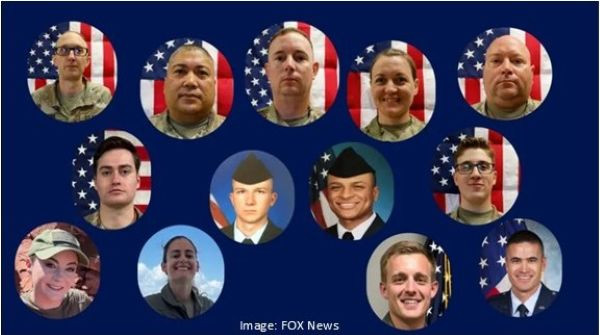
Today, as we honor our all of our fallen on Memorial Day 2026, let us especially remember Maj. John ‘Alex’ Klinner, Capt. Ariana G. Savino, Tech. Sgt. Tyler H. Simmons, Tech. Sgt. Ashley B. Pruitt, Capt. Seth R. Koval, Capt. Curtis J. Angst, Sgt. Declan Coady, Capt. Cody Khork, Sgt. 1st Class Nicole Amor, Sgt. 1st Class Noah Tietjens, Maj. Jeffrey O’Brien, Chief Warrant Officer 3 Robert Marzan, Sgt. Benjamin Pennington, who recently made the ultimate sacrifice in the war Islam has declared on us.
Let us honor the ideas for which they fell and resolve to demand in remembrance of their sacrifice that today’s politicians have the integrity and moral clarity to openly defend those ideas by speaking the truth about who our enemies are and about what our war in the Middle East is all about.
An Army brat born at Ft. Leonard Wood, Missouri, George Rasley is editor of Richard Viguerie's ConservativeHQ.com and is a veteran of over 300 political campaigns. A member of American MENSA, he served on the staff of Vice President Dan Quayle, as Director of Policy and Communication for former Congressman Adam Putnam (FL-12) then Vice Chairman of the Oversight and Government Reform Committee's Subcommittee on National Security and Foreign Affairs, and as spokesman for retired Rep. Mac Thornberry formerly a member of the House Intelligence Committee and Chairman of the House Armed Services Committee.
They certainly would not recognize it in its commercialization as a three-day-long mattress sale or as the unofficial beginning of summer and an excuse to sell beer and cook hot dogs and ribs.
Nor would they recognize it as a celebration of militarism and the neo con version of patriotism – which it often seems to have become.
In 1868, John A. Logan, Commander in Chief of the Grand Army of the Republic (a fraternal organization for Union veterans) issued “General Order Number 11,” designating May 30 as a memorial day, to be set aside "for the purpose of strewing with flowers or otherwise decorating the graves of comrades who died in defense of their country during the late rebellion, and whose bodies now lie in almost every city, village, and hamlet churchyard in the land."
In 1866, just a year after the end of the American Civil War, the Ladies Memorial Association of Columbus, Georgia passed a resolution to set aside one day annually to memorialize the Confederate dead, and even today throughout the South “Confederate Memorial Day” is observed as a state holiday with many government offices and businesses closed.
The common denominator in the establishment of these observances, because holiday is really not the right word to convey their intent, is the recognition of the death of over 600,000 Americans – the Civil War’s terrible cost that was reckoned-up in “almost every city, village, and hamlet churchyard in the land."
Today, that terrible cost is rarely given any specific public acknowledgement. It seems somehow quaintly Victorian to dwell on war’s ultimate byproduct: Death.
And of course acknowledging that when politicians decide to go to war that death ensues for many of those they send certainly puts a damper on the summer picnic.
But those who established Memorial Day knew war’s terrible cost intimately and, while they held to the justness of their respective causes, they were firm in their resolve that the deaths of those hundreds of thousands lost in the Civil War should not be forgotten.
In his May 30, 1868 Memorial Day address at Arlington National Cemetery Congressman, later President, James Garfield said “I am oppressed with a sense of the impropriety of uttering words on this occasion. If silence is ever golden, it must be here, beside the graves of fifteen thousand men, whose lives were more significant than speech, and whose death was a poem the music of which can never be sung.”
In the 161 years since the Civil War ended, and Americans began taking a day in May to remember the Civil War’s fallen, many more American war dead have joined those of the Civil War in our Nation’s cemeteries.
Garfield, one of our most underestimated Presidents, knew what he was talking about because he knew war; he served as a major general in the Union Army during the Civil War, and fought in the battles of Middle Creek, Shiloh, and Chickamauga.
Memorial Day, as originally conceived as “Decoration Day” in Garfield’s time was much less a day of jingoistic patriotism and much more a day of remembering the terrible cost of war. It is worth noting that back when the original purpose of Memorial Day was fresh in the minds of Americans, it seems that politicians and elected officials were not nearly so quick to advocate the use of military force.
There were no speeches about “crushing” the enemy; it was a day when mere politicians recognized the great and undoubted sacrifice and courage of the fallen and humbled themselves in awe before it.
In the obscurity into which President Garfield has fallen another piece of his wisdom has been largely lost to history; “Ideas are the great warriors of the world, and a war that has no idea behind it, is simply a brutality.”
There is no territory in Iran, Iraq or Afghanistan that is worth one American soldier’s life; but the ideas in the Declaration of Independence and of liberty under the Constitution are what Americans have willingly given their lives for since the Battles of Concord and Lexington some 240 years ago.
And make no mistake about it – it is our ideas, not our weapons that the Islamists fear. They understand they are not fighting for territory, but against our vision of liberty under the Constitution.
The ideas that all people are created equal, that they are endowed by their creator with “certain unalienable Rights, that among these are Life, Liberty and the pursuit of Happiness” is what Islamists are fighting to the death to defeat.
But this is not a new war. It is a war that has been fought in a thousand battles since America’s founding, and it is a cause that Americans have uniquely adopted as the one reason to move a country dedicated to “Life, Liberty and the pursuit of Happiness” into the death and sorrow that war inevitably brings.
But for some reason most of today’s politicians are too cowardly to speak the truth about what is really at stake in our war in the Middle East.
Today, as we honor our all of our fallen on Memorial Day 2026, let us especially remember Maj. John ‘Alex’ Klinner, Capt. Ariana G. Savino, Tech. Sgt. Tyler H. Simmons, Tech. Sgt. Ashley B. Pruitt, Capt. Seth R. Koval, Capt. Curtis J. Angst, Sgt. Declan Coady, Capt. Cody Khork, Sgt. 1st Class Nicole Amor, Sgt. 1st Class Noah Tietjens, Maj. Jeffrey O’Brien, Chief Warrant Officer 3 Robert Marzan, Sgt. Benjamin Pennington, who recently made the ultimate sacrifice in the war Islam has declared on us.
Let us honor the ideas for which they fell and resolve to demand in remembrance of their sacrifice that today’s politicians have the integrity and moral clarity to openly defend those ideas by speaking the truth about who our enemies are and about what our war in the Middle East is all about.
An Army brat born at Ft. Leonard Wood, Missouri, George Rasley is editor of Richard Viguerie's ConservativeHQ.com and is a veteran of over 300 political campaigns. A member of American MENSA, he served on the staff of Vice President Dan Quayle, as Director of Policy and Communication for former Congressman Adam Putnam (FL-12) then Vice Chairman of the Oversight and Government Reform Committee's Subcommittee on National Security and Foreign Affairs, and as spokesman for retired Rep. Mac Thornberry formerly a member of the House Intelligence Committee and Chairman of the House Armed Services Committee.