
A new report by the researchers at the American Accountability Foundation documents that 21 assets of the Chinese Communist Party have infiltrated American universities and laboratories. This is a massive, but largely unaddressed, national security threat.
The report details infiltration of the United States research enterprise by scientists and engineers from the People’s Republic of China. The results are sobering; there are numerous examples of active members of the Chinese Communist Party being appointed to sensitive positions at U.S. universities and Chinese researchers being placed in positions that will allow them to transfer technology and research to the People’s Liberation Army and cultivate relationships with critical defense researchers in the U.S.
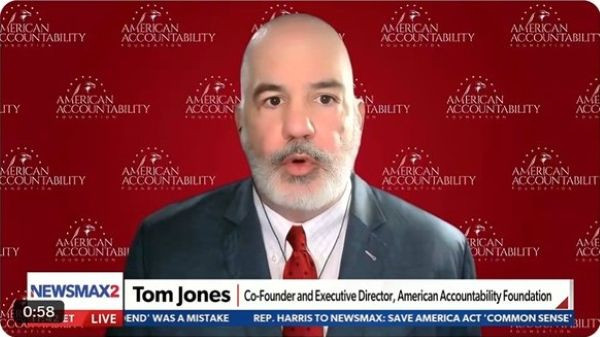
As AAF President Tom Jones explained, “Elite Chinese nationals [are] coming to US universities to soak up the science and technology.”
AAF’s goal in this research is to take America’s discussion of the threat posed by China academics from somewhat academic macro level discussions – of which there are plenty – and crystalize it into specific actionable examples of men and women who have infiltrated sensitive parts of the military research infrastructure in the United States and spur policy makers to address the problem. Unfortunately for our country, our findings show that there are specific and serious national security threats posed by the universities’ persistent recruitment of research associates and postdoctoral fellows under the J-1 Visa Program. This initial report details specific men and women whose background and research area make them a likely asset to the Chinese Communist Party.
In a recent article for the Federalist Helen Raleigh noted the National Counterintelligence and Security Center identified the CCP as posing “the broadest, most active, and persistent espionage threat” to the United States, with no rival matching China’s aggressive targeting of American research. Beijing exploits open partnerships, talent recruitment programs such as the Thousand Talents Plan, and the presence of Chinese scholars in the U.S. to acquire critical technologies — both legally through open collaboration (with the intent to transfer them home) and illegally through espionage and theft, thereby threatening U.S. national security and economic prosperity.
Editor’s Note: The Epoch Times today reported Anthropic, the maker of the Claude chatbot, accused three of China’s leading artificial intelligence companies of creating more than 24,000 fraudulent accounts to tap into its system and train their own models.
These twenty-one individuals who, because of the dual-use threat of their research, close ties to the military research sector in China, and/or clear ties to the Chinese Communist Party should be expelled from the United States or never be re-admitted:
Among the red flags the AAF report raises is that all 21 individuals study or work in sensitive dual-use fields such as semiconductors, AI, quantum computing, and viral pathogens. These researchers are embedded at top U.S. institutions — Harvard, Carnegie Mellon, the Lawrence Berkeley National Laboratory, and others — often contributing to federally funded work via agencies such as the Department of Energy, the National Institutes of Health, the Air Force Office of Scientific Research, the U.S. Army Research Laboratory, the Office of Naval Research, and the Defense Advanced Research Projects Agency (DARPA).
As the AAF research shows, America has a serious problem with the Chinese Communist Party exploiting the U.S. university system, and there is little attention being paid to the specific individuals at U.S. universities who represent a national security threat.
In conclusion the authors of the report said, “As we conducted the research, it became clear that Chinese nationals, with the acquiescence of university leadership, have taken over significant portions of the research infrastructure of university research departments.”
Many of the individuals highlighted above were hired by Chinese nationals who are in the country likely on an H-1B visa. Further, AAF noted many labs are led and dominated by Chinese nationals. While the AAF report focused on the J-1 holders, focus on the H-1B holders similar to the J-1 holders would be a significant next step in addressing infiltration concerns, particularly since there is a significant appetite for addressing H-1B abuse.
We urge the Chairmen of the House and Senate Intelligence Committees to conduct hearings and investigations of the heretofore largely ignored threat of Communist Chinese infiltration of U.S. universities and their national security-related labs and research departments.
The report details infiltration of the United States research enterprise by scientists and engineers from the People’s Republic of China. The results are sobering; there are numerous examples of active members of the Chinese Communist Party being appointed to sensitive positions at U.S. universities and Chinese researchers being placed in positions that will allow them to transfer technology and research to the People’s Liberation Army and cultivate relationships with critical defense researchers in the U.S.
As AAF President Tom Jones explained, “Elite Chinese nationals [are] coming to US universities to soak up the science and technology.”
AAF’s goal in this research is to take America’s discussion of the threat posed by China academics from somewhat academic macro level discussions – of which there are plenty – and crystalize it into specific actionable examples of men and women who have infiltrated sensitive parts of the military research infrastructure in the United States and spur policy makers to address the problem. Unfortunately for our country, our findings show that there are specific and serious national security threats posed by the universities’ persistent recruitment of research associates and postdoctoral fellows under the J-1 Visa Program. This initial report details specific men and women whose background and research area make them a likely asset to the Chinese Communist Party.
In a recent article for the Federalist Helen Raleigh noted the National Counterintelligence and Security Center identified the CCP as posing “the broadest, most active, and persistent espionage threat” to the United States, with no rival matching China’s aggressive targeting of American research. Beijing exploits open partnerships, talent recruitment programs such as the Thousand Talents Plan, and the presence of Chinese scholars in the U.S. to acquire critical technologies — both legally through open collaboration (with the intent to transfer them home) and illegally through espionage and theft, thereby threatening U.S. national security and economic prosperity.
Editor’s Note: The Epoch Times today reported Anthropic, the maker of the Claude chatbot, accused three of China’s leading artificial intelligence companies of creating more than 24,000 fraudulent accounts to tap into its system and train their own models.
These twenty-one individuals who, because of the dual-use threat of their research, close ties to the military research sector in China, and/or clear ties to the Chinese Communist Party should be expelled from the United States or never be re-admitted:
- Qianying Cao, a postdoctoral research assistant at a Brown University mathematics lab funded by multiple military services, led the CCP chapter on her campus in China.
- Bijuan Chen, a leading condensed matter physicist (optics, sensors, quantum computing) researcher at Purdue, who comes to the United States from HPSTAR, a research lab blacklisted by the Department of Commerce – Bureau of Industry and Security for activities “contrary to the national security or foreign policy interests of the United States.”
- Jingao Xu, an expert in drone research technology at Carnegie Mellon, where DoW runs a software research lab, who led the CCP chapter on his campus.
- Yingkai Dong who is a leading expert on exoskeletons that could enhance infantry operations, was also an active supporter of the CCP in China.
- Zongliang Xie is working a Lawrence Berkeley National Lab on advanced materials research with military applications and funding.
- Cen Zhang a Georgia Tech (a university with a history of CCP issues) AI and Machine Language expert who recently was part of the team that won a DARPA Artificial Intelligence Cyber Challenge.
- Jinghan Gao at the University of Florida who has worked on DoW underwritten research on semiconductors that has applications for radar and hypersonic technologies.
- Xuewen Dong at Stevens Institute of Technology, where DoW runs a lab, who is doing leading research on edge computing with application for drones and unmanned vehicles, who comes to the U.S. from a university affiliated with the defense infrastructure in China.
- Peihao Geng at Penn State, which hosts a defense lab, who has partnered with Los Alamos Laboratory on AI and LLM enhancement of advanced laser welding. Geng also comes from a flagged university in China.
- Chunyin Zhu who is a senior member of a CCP affiliated party in China (and who we have imagery of posing next to a hammer and sickle) is currently working on advanced chemistry research at Indiana University.
- Xiaobin Zhao at USC who is working on quantum sensing and metrology, capabilities with significant military impact, worked at a PLA controlled defense conglomerate before coming to the U.S.
- Guangyao Chen a postdoctoral researcher at Cornell focusing on Artificial Intelligence, a research priority for both the U.S. military and the PLA.
- Xiaoyi Chen another Indiana University research, this time an expert in AI machine learning, who comes to the U.S. from PLA tied universities, and whose mentor at IU was raided by the FBI.
- Xiangwei Guo a materials engineering postdoc at UW Madison who is part of a team leading advanced semiconductor research.
- Boa Xianyang at Harvard who is working on DoW funded polymers research that could enhance the PLA’s capabilities in a broad variety of military materiel from vehicles to protective equipment to weapons.
- Ziang Yu at UW-Madison who is a postdoc working on nuclear materials research funded by the National Nuclear Security Administration.
- Ge Chen a Purdue electrical engineering postdoc working on electrical grid technologies whose mentor is a leading CCP official in China and has ties to their defense industry.
- Zebin Li at UW-Madison who is working on next-gen semiconductors and was a participant in China’s notorious Thousand Talents program focused on recruiting overseas scientific talent for the CCP.
- Yujie Zhu at UW-Madison who is a leading expert in the development of next generation of semiconductors and came to the U.S. from a Chinese university with close ties to the CCP.
- Yu Zhao who was at Cornell and is an expert in critical biological technologies, including CRISPR, which could be weaponized.
- Xiaoyi Fan at Harvard who is one of the world’s leading experts on Western Equine Encephalitis Virus, which NIH, CDC, and DHS classify as a priority pathogen representing a grave threat to human health.
Among the red flags the AAF report raises is that all 21 individuals study or work in sensitive dual-use fields such as semiconductors, AI, quantum computing, and viral pathogens. These researchers are embedded at top U.S. institutions — Harvard, Carnegie Mellon, the Lawrence Berkeley National Laboratory, and others — often contributing to federally funded work via agencies such as the Department of Energy, the National Institutes of Health, the Air Force Office of Scientific Research, the U.S. Army Research Laboratory, the Office of Naval Research, and the Defense Advanced Research Projects Agency (DARPA).
As the AAF research shows, America has a serious problem with the Chinese Communist Party exploiting the U.S. university system, and there is little attention being paid to the specific individuals at U.S. universities who represent a national security threat.
In conclusion the authors of the report said, “As we conducted the research, it became clear that Chinese nationals, with the acquiescence of university leadership, have taken over significant portions of the research infrastructure of university research departments.”
Many of the individuals highlighted above were hired by Chinese nationals who are in the country likely on an H-1B visa. Further, AAF noted many labs are led and dominated by Chinese nationals. While the AAF report focused on the J-1 holders, focus on the H-1B holders similar to the J-1 holders would be a significant next step in addressing infiltration concerns, particularly since there is a significant appetite for addressing H-1B abuse.
We urge the Chairmen of the House and Senate Intelligence Committees to conduct hearings and investigations of the heretofore largely ignored threat of Communist Chinese infiltration of U.S. universities and their national security-related labs and research departments.