
FLASH UPDATE: Our friend former CIA operator Sam Faddis reports the death toll of protestors murdered in Iran is more like 12,000, not a few hundred https://andmagazine.substack.com/p/12000-dead-in-iran
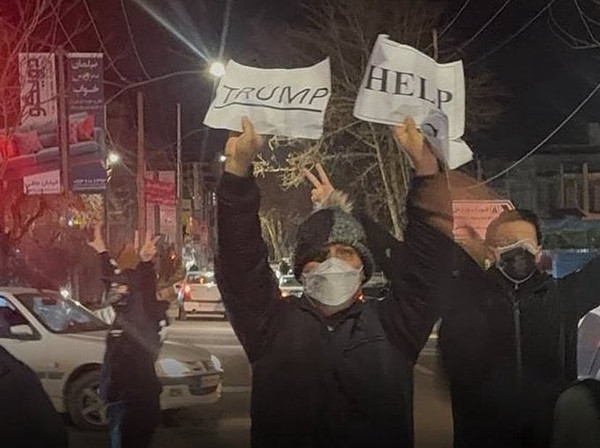
The threshold that President Donald Trump set for intervening to prevent mass civilian deaths in Iran has been apparently crossed many times over. Since January 8, 2026, Islamic security forces have reportedly shot and killed hundreds, and more likely thousands, of protesters. Millions of Iranians have continued to take extraordinary risks by remaining in the streets, facing live ammunition, cold, and rain. The question is how long they can endure without outside intervention?
Action taken only after the authorities succeed in crushing the protests will be of little value, either to Iranians or to the United States, observed Mardo Soghom, writing for the Middle East Forum.
If the Islamic Republic leadership is allowed to reassert control, as in the past, the regime would respond with sweeping retaliation against its own population. Tens of thousands could be arrested and tortured, hundreds could face execution, and Washington would have scant ability to shield them, wrote Mr. Soghom.
Given the level of violence deployed by the authorities, protests may be suppressed in the coming days, even though Iranians turned out in overwhelming numbers on January 9 and 10, 2026, following calls by exiled Prince Reza Pahlavi for expanded demonstrations.
What has delayed action by the United States or Israel remains unclear.
Is there a divergence between Washington and Jerusalem? Is the Trump administration restraining Israel, which had earlier signaled support for protesters? Or is there internal division in Washington following the intervention in Venezuela? No one has suggested deploying American ground forces, nor have Iranians called for them. Selective air action, however, could alter the balance significantly by intimidating security forces and limiting their ability to fire on civilians with impunity, suggested Mr. Soghom.
So, what is the death toll thus far in the 16th day of protests?
No precise death toll can be ascertained. Karl Vick and Kay Armin Serjoie, writing for Time magazine, report that the number of protesters killed by Iranian security forces now reaches into the thousands. Despite an internet blackout, cell phone footage has emerged of truck-mounted machine guns strafing residential streets, hospitals swamped by shooting victims, and a morgue overwhelmed by hundreds of bodies after only the first night of assaults.
Starting with reports from a handful of Tehran hospitals, an informal, expatriate group of academics and professionals calculated that protester deaths could have reached 6,000 through Saturday, reported Vick and Serjoie. The calculation does not include bodies carried by authorities not to hospitals but directly to morgues—such as the hundreds lain on the floors and parking lot of the Kahrizak Forensic Center, outside the capital. According to a social media post, the scene shows only bodies killed on Thursday night.
On Friday night, security forces were firing freely in the Nazemabad neighborhood of Tehran, a resident said. “There's blood everywhere, on the walls, on the streets,” he said. “It’s catastrophic. They killed all they could.”
The Iranian regime has a long and remorseless record, not only killing but maiming, notably with pellet blasts aimed into the eyes. “It’s not so busy tonight,” a resident of the Niavaran neighborhood in northeast Terhan reported on Sunday. “With this level of killings we’ve seen, everyone says I’ve lost a cousin, or a friend, or knows someone killed, and add to that so many people blinded. In Farabi Hospital they had to empty so, so many eye sockets.”
However, the Iranian revolutionaries have had some success in attacking the leaders of the Islamic Republic’s repression apparatus.
And
Everyone who is realistic about the now 47-year-old war Iran’s theocratic regime declared on America knows that regime change is the only way to permanently stop Iran’s drive to acquire nuclear weapons.
The weakness of Iran’s system of Wilayat al-Faqih has never been more obvious and the opportunity to undermine it from within rarely greater. As James Phillips, a senior research fellow for Middle Eastern affairs at The Heritage Foundation said in a 2019 article, the harder Iran’s dictatorship struggles to oppose reforms that threaten its power, the sooner young Iranians and Arabs forced to live under Tehran’s thumb will reach the conclusion that Iran’s Islamist model is bankrupt economically, politically, and morally.
Mr. President, the time to act with decisive force in Iran is now.
George Rasley is editor of Richard Viguerie's ConservativeHQ.com and is a veteran of over 300 political campaigns. A member of American MENSA, he served on the staff of Vice President Dan Quayle, as Director of Policy and Communication for former Congressman Adam Putnam (FL-12) then Vice Chairman of the Oversight and Government Reform Committee's Subcommittee on National Security and Foreign Affairs, and as spokesman for retired Rep. Mac Thornberry formerly a member of the House Intelligence Committee and Chairman of the House Armed Services Committee.
The threshold that President Donald Trump set for intervening to prevent mass civilian deaths in Iran has been apparently crossed many times over. Since January 8, 2026, Islamic security forces have reportedly shot and killed hundreds, and more likely thousands, of protesters. Millions of Iranians have continued to take extraordinary risks by remaining in the streets, facing live ammunition, cold, and rain. The question is how long they can endure without outside intervention?
Action taken only after the authorities succeed in crushing the protests will be of little value, either to Iranians or to the United States, observed Mardo Soghom, writing for the Middle East Forum.
If the Islamic Republic leadership is allowed to reassert control, as in the past, the regime would respond with sweeping retaliation against its own population. Tens of thousands could be arrested and tortured, hundreds could face execution, and Washington would have scant ability to shield them, wrote Mr. Soghom.
Given the level of violence deployed by the authorities, protests may be suppressed in the coming days, even though Iranians turned out in overwhelming numbers on January 9 and 10, 2026, following calls by exiled Prince Reza Pahlavi for expanded demonstrations.
What has delayed action by the United States or Israel remains unclear.
Is there a divergence between Washington and Jerusalem? Is the Trump administration restraining Israel, which had earlier signaled support for protesters? Or is there internal division in Washington following the intervention in Venezuela? No one has suggested deploying American ground forces, nor have Iranians called for them. Selective air action, however, could alter the balance significantly by intimidating security forces and limiting their ability to fire on civilians with impunity, suggested Mr. Soghom.
So, what is the death toll thus far in the 16th day of protests?
No precise death toll can be ascertained. Karl Vick and Kay Armin Serjoie, writing for Time magazine, report that the number of protesters killed by Iranian security forces now reaches into the thousands. Despite an internet blackout, cell phone footage has emerged of truck-mounted machine guns strafing residential streets, hospitals swamped by shooting victims, and a morgue overwhelmed by hundreds of bodies after only the first night of assaults.
Starting with reports from a handful of Tehran hospitals, an informal, expatriate group of academics and professionals calculated that protester deaths could have reached 6,000 through Saturday, reported Vick and Serjoie. The calculation does not include bodies carried by authorities not to hospitals but directly to morgues—such as the hundreds lain on the floors and parking lot of the Kahrizak Forensic Center, outside the capital. According to a social media post, the scene shows only bodies killed on Thursday night.
On Friday night, security forces were firing freely in the Nazemabad neighborhood of Tehran, a resident said. “There's blood everywhere, on the walls, on the streets,” he said. “It’s catastrophic. They killed all they could.”
The Iranian regime has a long and remorseless record, not only killing but maiming, notably with pellet blasts aimed into the eyes. “It’s not so busy tonight,” a resident of the Niavaran neighborhood in northeast Terhan reported on Sunday. “With this level of killings we’ve seen, everyone says I’ve lost a cousin, or a friend, or knows someone killed, and add to that so many people blinded. In Farabi Hospital they had to empty so, so many eye sockets.”
However, the Iranian revolutionaries have had some success in attacking the leaders of the Islamic Republic’s repression apparatus.
And
Everyone who is realistic about the now 47-year-old war Iran’s theocratic regime declared on America knows that regime change is the only way to permanently stop Iran’s drive to acquire nuclear weapons.
The weakness of Iran’s system of Wilayat al-Faqih has never been more obvious and the opportunity to undermine it from within rarely greater. As James Phillips, a senior research fellow for Middle Eastern affairs at The Heritage Foundation said in a 2019 article, the harder Iran’s dictatorship struggles to oppose reforms that threaten its power, the sooner young Iranians and Arabs forced to live under Tehran’s thumb will reach the conclusion that Iran’s Islamist model is bankrupt economically, politically, and morally.
Mr. President, the time to act with decisive force in Iran is now.
George Rasley is editor of Richard Viguerie's ConservativeHQ.com and is a veteran of over 300 political campaigns. A member of American MENSA, he served on the staff of Vice President Dan Quayle, as Director of Policy and Communication for former Congressman Adam Putnam (FL-12) then Vice Chairman of the Oversight and Government Reform Committee's Subcommittee on National Security and Foreign Affairs, and as spokesman for retired Rep. Mac Thornberry formerly a member of the House Intelligence Committee and Chairman of the House Armed Services Committee.