
Almost all economic indicators signal a booming economy, despite the ongoing war with Iran and the associated rise in oil prices:
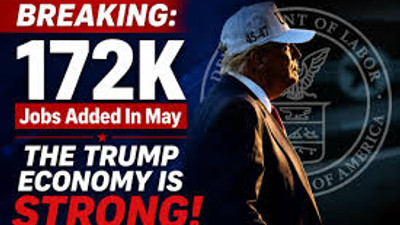
The U.S. labor market has significantly exceeded expert predictions. The Department of Labor reported that employers added 172,000 jobs, more than double what economists anticipated, while the unemployment rate held steady at 4.3%.
Americans have seen wage increases, with average weekly earnings rising 0.7% in a single month and average hourly earnings growing.
The Trump administration's tax and pro-growth agenda has driven surges in private-sector investment, sending the NASDAQ, S&P 500, and Dow Jones to new highs.
The prime-age labor force participation rate has risen to its highest point since 2001.
However, voters do not appear to believe the numbers are improving their economic prospects, with most voters telling Rasmussen Reports they believe the U.S. economy has gotten worse since last year. However, they’re divided over which party can do a better job of handling it.
A recent Rasmussen Reports national telephone and online survey found that 58% of Likely U.S. Voters say the economy has gotten worse in the past year. Only 17% think the economy has gotten better, and 21% believe the economy has stayed about the same in the past year.
Forty-three percent (43%) trust Democrats more to handle the economy, while 42% trust Republicans more and 15% are not sure which party they trust more on the issue. In January, Republicans led by a two-point margin (46% to 44%) on this question.
Fifty-three percent (53%) say that, in thinking about this fall’s congressional election, the economy will be the most important issue in deciding their vote. Thirty-seven percent (37%) think some other issue is more important than the economy, and 10% are not sure.
Among those who say the economy will be the most important issue in the November midterm election, 48% trust Democrats more to handle the economy.
Eighty-three percent (83%) of Democrats trust their own party more to handle the economy, and 80% of Republicans trust the GOP more on this issue. Among voters not affiliated with either major party, 36% trust Republicans and 32% trust Democrats more to handle the economy, while 32% are not sure.
Twenty-nine percent (29%) of Republicans say the economy has gotten better in the past year, but only nine percent (9%) of Democrats and 11% of unaffiliated voters agree. Seventy-nine percent (79%) of Democrats believe the economy has gotten worse in the past year, a belief shared by 34% of Republicans and 60% of unaffiliated voters.
Fifty-six percent (56%) of Democrats, 54% of Republicans and 48% of unaffiliated voters say that, in thinking about this fall’s congressional election, the economy will be the most important issue in deciding their vote.
More women voters (63%) than men (53%) the economy has gotten worse in the past year. On the issue of which party is trusted more to handle the economy, the “gender gap” is a net 19 points, with women voters trusting Democrats more by a 10-point margin (47% to 37%) while men trust Republicans more by a nine-point margin (48% to 39%).
Forty-two percent (42%) of whites, 61% of black voters, 38% of Hispanics and 28% of other minorities trust Democrats more to handle the economy, while 45% of whites, 20% of black voters, 42% of Hispanics and 38% of other minorities trust Republicans more. Black voters are most likely to say the economy has gotten worse in the past year.
Voters in their 40s are most likely to say the economy will be the most important issue in this fall’s congressional election, while those ages 50 to 64 are most likely to trust Republicans to handle the economy.
Breaking down the electorate by income categories, voters earning between $50,000 and $100,000 a year are most likely to say the economy will be the most important issue in the fall midterm elections, while those with annual incomes over $200,000 are most likely to trust Democrats to handle the economy.
Among those who voted for Kamala Harris in the 2024 presidential election, 86% say the economy has gotten worse in the past year, but only 29% of Donald Trump voters agree.
The survey of 1,101 U.S. Likely Voters was conducted on May 26-28, 2026 by Rasmussen Reports. The margin of sampling error is +/- 3 percentage points with a 95% level of confidence. Field work for all Rasmussen Reports surveys is conducted by Pulse Opinion Research, LLC. See methodology. To see survey question wording, click here.
The U.S. labor market has significantly exceeded expert predictions. The Department of Labor reported that employers added 172,000 jobs, more than double what economists anticipated, while the unemployment rate held steady at 4.3%.
Americans have seen wage increases, with average weekly earnings rising 0.7% in a single month and average hourly earnings growing.
The Trump administration's tax and pro-growth agenda has driven surges in private-sector investment, sending the NASDAQ, S&P 500, and Dow Jones to new highs.
The prime-age labor force participation rate has risen to its highest point since 2001.
However, voters do not appear to believe the numbers are improving their economic prospects, with most voters telling Rasmussen Reports they believe the U.S. economy has gotten worse since last year. However, they’re divided over which party can do a better job of handling it.
A recent Rasmussen Reports national telephone and online survey found that 58% of Likely U.S. Voters say the economy has gotten worse in the past year. Only 17% think the economy has gotten better, and 21% believe the economy has stayed about the same in the past year.
Forty-three percent (43%) trust Democrats more to handle the economy, while 42% trust Republicans more and 15% are not sure which party they trust more on the issue. In January, Republicans led by a two-point margin (46% to 44%) on this question.
Fifty-three percent (53%) say that, in thinking about this fall’s congressional election, the economy will be the most important issue in deciding their vote. Thirty-seven percent (37%) think some other issue is more important than the economy, and 10% are not sure.
Among those who say the economy will be the most important issue in the November midterm election, 48% trust Democrats more to handle the economy.
Eighty-three percent (83%) of Democrats trust their own party more to handle the economy, and 80% of Republicans trust the GOP more on this issue. Among voters not affiliated with either major party, 36% trust Republicans and 32% trust Democrats more to handle the economy, while 32% are not sure.
Twenty-nine percent (29%) of Republicans say the economy has gotten better in the past year, but only nine percent (9%) of Democrats and 11% of unaffiliated voters agree. Seventy-nine percent (79%) of Democrats believe the economy has gotten worse in the past year, a belief shared by 34% of Republicans and 60% of unaffiliated voters.
Fifty-six percent (56%) of Democrats, 54% of Republicans and 48% of unaffiliated voters say that, in thinking about this fall’s congressional election, the economy will be the most important issue in deciding their vote.
More women voters (63%) than men (53%) the economy has gotten worse in the past year. On the issue of which party is trusted more to handle the economy, the “gender gap” is a net 19 points, with women voters trusting Democrats more by a 10-point margin (47% to 37%) while men trust Republicans more by a nine-point margin (48% to 39%).
Forty-two percent (42%) of whites, 61% of black voters, 38% of Hispanics and 28% of other minorities trust Democrats more to handle the economy, while 45% of whites, 20% of black voters, 42% of Hispanics and 38% of other minorities trust Republicans more. Black voters are most likely to say the economy has gotten worse in the past year.
Voters in their 40s are most likely to say the economy will be the most important issue in this fall’s congressional election, while those ages 50 to 64 are most likely to trust Republicans to handle the economy.
Breaking down the electorate by income categories, voters earning between $50,000 and $100,000 a year are most likely to say the economy will be the most important issue in the fall midterm elections, while those with annual incomes over $200,000 are most likely to trust Democrats to handle the economy.
Among those who voted for Kamala Harris in the 2024 presidential election, 86% say the economy has gotten worse in the past year, but only 29% of Donald Trump voters agree.
The survey of 1,101 U.S. Likely Voters was conducted on May 26-28, 2026 by Rasmussen Reports. The margin of sampling error is +/- 3 percentage points with a 95% level of confidence. Field work for all Rasmussen Reports surveys is conducted by Pulse Opinion Research, LLC. See methodology. To see survey question wording, click here.