
Today, little noticed in an establishment media distracted by the lead-up to the Super Bowl, the Winter Olympics and the kidnapping of Nancy Guthrie, one of the most consequential negotiations of the 21st century will take place in Oman, where the United States and the Islamic Republic of Iran will meet.
The rare one-on-one meeting between the U.S. and the aggressor in the now-near 50-year war the Iranian theocracy declared on America could very well decide the future of Iran, and set the stage for a free, secular Iran.
Or it could be another fruitless dead-end, as those conducted by Obama and Biden were, that will leave the Ayatollahs in power to continue their reign as the #1 state sponsor of terrorism, and to continue their pursuit of the nuclear weapons necessary to start the great war Shia Muslim “Twelvers” believe is necessary to usher in the worldwide reign of Islam.
We have been critical of President Trump’s seeming failure to seize the moment presented by the nationwide protests against the Ayatollahs. However, as our friend former Navy intelligence officer and NSC staffer Dr. David Wurmser observed recently, President Trump’s seeming foot-dragging is more likely Donald Trump the master negotiator playing out the negotiations until everything is in place for a devastating strike on the Islamic Republic.
And, we note, it also allows President Trump to claim to other regional powers, such as Saudi Arabia, Turkey and Qatar, that fear the chaos and economic instability of regime-change in Iran, that he pursued peace and stability in the region, but his reasonable offers were rejected by the Ayatollahs.
President Trump has vowed to hit Iran “with speed and violence” if it does not accept three demands: ending its nuclear program and discarding its enriched uranium stockpile; reducing the number and range of ballistic missiles; and ending its support for militant groups across the region.
On Wednesday, Secretary of State Marco Rubio said the talks needed to include ballistic missiles, Iran’s aligned militias and its treatment of its own people “in order for talks to actually lead to something meaningful,” the New York Times reported.
Those four goals: The end of Iran’s nuclear weapons program, including the transfer of its weapons-grade nuclear stockpile, reducing its missile program, ceasing support for terrorism, and ending its domestic human rights abuses, have allegedly been U.S. policy for many years.
Obama and Biden paid lip service to them in public, even as they negotiated away American leverage over Iran and gave the Ayatollahs billions in no-strings-attached cash that went to fund terrorism and the Iranian nuclear weapons program.
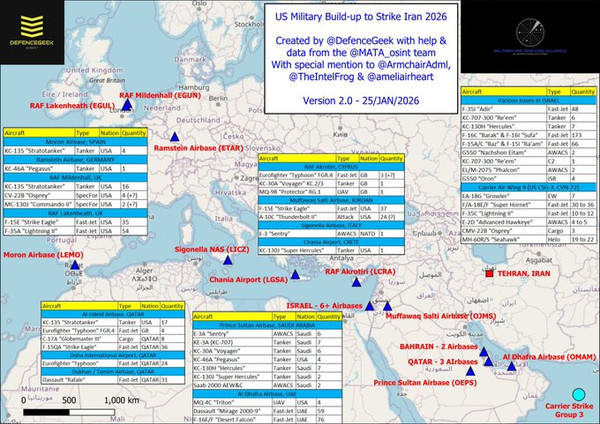
President Trump, on the other hand, appears to mean business, and he sent the USS Abraham Lincoln and its taskforce to demonstrate the seriousness of his demands.
So, after telling the Iranian protestors the “help is on the way,” why the month-long delay?
The most obvious reason is that, unlike the strike on the fixed targets of Iran’s nuclear weapons facilities, which the United States had rehearsed for years, taking out the Ayatollahs and their powerbase requires a great deal of current on-the-ground intelligence, which the United States lacks.
Private Bradley Manning’s vast document dump to Wikileaks effectively destroyed the American intelligence network in Iran, and it has been slow to rebuild.
The only country with an effective on-the-ground intelligence network in Iran is Israel, and the Israelis can be brought on board only if certain conditions are met, notably Israeli independence of action should the Ayatollahs strike Israel in retaliation for any American attack on the Islamic Republic.
Recent meetings between American and Israeli officials suggest those conditions are being resolved.
Everyone who is realistic about the now 47-year-old war Iran’s theocratic regime declared on America knows that regime change is the only way to permanently stop Iran’s drive to acquire nuclear weapons.
The weakness of Iran’s system of Wilayat al-Faqih has never been more obvious and the opportunity to undermine it from within rarely greater. If we want to end the threat of a nuclear-armed Iran, the time to decapitate the Iranian theocracy and replace it with something else is now.
Click here for a presentation prepared by CHQ Editor George Rasley for the American Security Council Foundation on if war with Iran is inevitable.
George Rasley is editor of Richard Viguerie's ConservativeHQ.com and is a veteran of over 300 political campaigns. A member of American MENSA, he served on the staff of Vice President Dan Quayle, as Director of Policy and Communication for former Congressman Adam Putnam (FL-12) then Vice Chairman of the Oversight and Government Reform Committee's Subcommittee on National Security and Foreign Affairs, and as spokesman for retired Rep. Mac Thornberry formerly a member of the House Intelligence Committee and Chairman of the House Armed Services Committee.
The rare one-on-one meeting between the U.S. and the aggressor in the now-near 50-year war the Iranian theocracy declared on America could very well decide the future of Iran, and set the stage for a free, secular Iran.
Or it could be another fruitless dead-end, as those conducted by Obama and Biden were, that will leave the Ayatollahs in power to continue their reign as the #1 state sponsor of terrorism, and to continue their pursuit of the nuclear weapons necessary to start the great war Shia Muslim “Twelvers” believe is necessary to usher in the worldwide reign of Islam.
We have been critical of President Trump’s seeming failure to seize the moment presented by the nationwide protests against the Ayatollahs. However, as our friend former Navy intelligence officer and NSC staffer Dr. David Wurmser observed recently, President Trump’s seeming foot-dragging is more likely Donald Trump the master negotiator playing out the negotiations until everything is in place for a devastating strike on the Islamic Republic.
And, we note, it also allows President Trump to claim to other regional powers, such as Saudi Arabia, Turkey and Qatar, that fear the chaos and economic instability of regime-change in Iran, that he pursued peace and stability in the region, but his reasonable offers were rejected by the Ayatollahs.
President Trump has vowed to hit Iran “with speed and violence” if it does not accept three demands: ending its nuclear program and discarding its enriched uranium stockpile; reducing the number and range of ballistic missiles; and ending its support for militant groups across the region.
On Wednesday, Secretary of State Marco Rubio said the talks needed to include ballistic missiles, Iran’s aligned militias and its treatment of its own people “in order for talks to actually lead to something meaningful,” the New York Times reported.
Those four goals: The end of Iran’s nuclear weapons program, including the transfer of its weapons-grade nuclear stockpile, reducing its missile program, ceasing support for terrorism, and ending its domestic human rights abuses, have allegedly been U.S. policy for many years.
Obama and Biden paid lip service to them in public, even as they negotiated away American leverage over Iran and gave the Ayatollahs billions in no-strings-attached cash that went to fund terrorism and the Iranian nuclear weapons program.
President Trump, on the other hand, appears to mean business, and he sent the USS Abraham Lincoln and its taskforce to demonstrate the seriousness of his demands.
So, after telling the Iranian protestors the “help is on the way,” why the month-long delay?
The most obvious reason is that, unlike the strike on the fixed targets of Iran’s nuclear weapons facilities, which the United States had rehearsed for years, taking out the Ayatollahs and their powerbase requires a great deal of current on-the-ground intelligence, which the United States lacks.
Private Bradley Manning’s vast document dump to Wikileaks effectively destroyed the American intelligence network in Iran, and it has been slow to rebuild.
The only country with an effective on-the-ground intelligence network in Iran is Israel, and the Israelis can be brought on board only if certain conditions are met, notably Israeli independence of action should the Ayatollahs strike Israel in retaliation for any American attack on the Islamic Republic.
Recent meetings between American and Israeli officials suggest those conditions are being resolved.
Everyone who is realistic about the now 47-year-old war Iran’s theocratic regime declared on America knows that regime change is the only way to permanently stop Iran’s drive to acquire nuclear weapons.
The weakness of Iran’s system of Wilayat al-Faqih has never been more obvious and the opportunity to undermine it from within rarely greater. If we want to end the threat of a nuclear-armed Iran, the time to decapitate the Iranian theocracy and replace it with something else is now.
Click here for a presentation prepared by CHQ Editor George Rasley for the American Security Council Foundation on if war with Iran is inevitable.
George Rasley is editor of Richard Viguerie's ConservativeHQ.com and is a veteran of over 300 political campaigns. A member of American MENSA, he served on the staff of Vice President Dan Quayle, as Director of Policy and Communication for former Congressman Adam Putnam (FL-12) then Vice Chairman of the Oversight and Government Reform Committee's Subcommittee on National Security and Foreign Affairs, and as spokesman for retired Rep. Mac Thornberry formerly a member of the House Intelligence Committee and Chairman of the House Armed Services Committee.