
Today, all of our rights are being stripped because we have allowed manufactured dissension to distract us. The autocratic COVID response opened a window on HHS’ and the whole of government manipulations that threaten us all. Perhaps, when more realize the enormity of the agencies working against us, it will spark a survival desire all Americans can unite behind before it is too late.
In Spot the Trick Part 2 we saw how using a Relative Risk rather than Absolute Risk format tends to inflate the perception of a drug’s effectiveness and can lead to inferior treatments. While both numbers are accurate, they provide different information for research versus treatment purposes. The practice of using Relative Risk to promote drugs is so misleading the FDA issued a strong warning in its Communication Guidelines:
“Patients are unduly influenced when risk information is presented using a relative risk approach; this can result in suboptimal decisions…Thus, an absolute risk format should be used.”
Yet today, the headlines routinely tout drugs and doctors make patient recommendations quoting its relative risk reduction.
It wasn’t always this way:
How the shift happened
This was deliberate. Internal documents and FOIA requests later showed that political strategists and behavioral science advisors to HHS prioritized maximizing uptake through “motivational framing.” That meant avoiding absolute risk, which they knew would look unimpressive to the public. FDA media advisors acknowledged that “absolute reduction numbers would appear small and may dilute urgency.”
The original HHS guidance was never revoked nor announced. It was a behavioral drift toward profit-friendly language that ignored the guidance and the welfare of the patient.
How pharma and the medical community rationalize use of RRR
Doctors are inundated
ARR and RRR come from the same baseline
Experts claim relative risk reduction (RRR) is “acceptable because it uses the same baseline risk as absolute risk reduction (ARR)”. (The baseline risk would be the risk occurring in the non-treated group.)
Here’s the problem:
It’s true both use the risks from the untreated arm. The problem is they measure different things:
RRR ignores the one thing patients care about, “how taking this drug will benefit me”.
The COVID Example
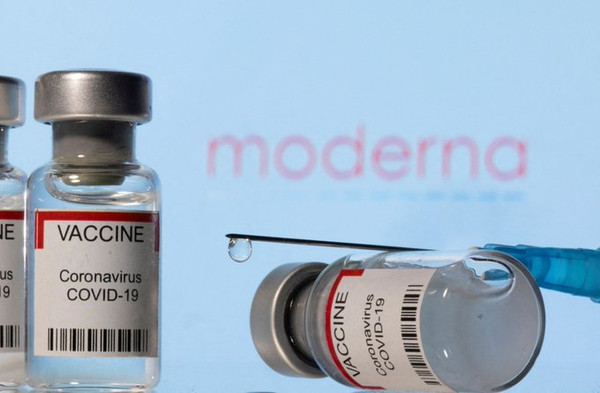
Most assumed that COVID’s “95% efficacy” meant that if jabbed they were 95% protected from catching COVID. Not at all.
How many would have taken the shot if they knew the 95% was a relative number? In actual use, the vaccine only offered an .8% chance they would not have a positive PCR test PLUS COVID symptoms at the same time for 60 days after their treatment.
In simpler terms: 119 people had to be fully vaccinated for 1 of them to see the meager benefit. The other 118 received no benefit but faced multiple adverse effects.
This 3-part series focused on statins but is really about how all-of-government is misleading us in ways we never imagined. Many of the distortions are total fabrications:
This is why it is up to us the public, to stay better informed and share information with your doctors, family, and friends.
Truth Monster John Anthony is a national speaker, researcher, founder of the Sustainable Freedom Lab, and an expert on HUD and property rights infringements click here to subscribe to his must-read Substack. The Truth Monster is a reader-supported publication. To receive new posts and support its work, consider becoming a free or paid subscriber.
In Spot the Trick Part 2 we saw how using a Relative Risk rather than Absolute Risk format tends to inflate the perception of a drug’s effectiveness and can lead to inferior treatments. While both numbers are accurate, they provide different information for research versus treatment purposes. The practice of using Relative Risk to promote drugs is so misleading the FDA issued a strong warning in its Communication Guidelines:
“Patients are unduly influenced when risk information is presented using a relative risk approach; this can result in suboptimal decisions…Thus, an absolute risk format should be used.”
Yet today, the headlines routinely tout drugs and doctors make patient recommendations quoting its relative risk reduction.
It wasn’t always this way:
How the shift happened
- Studies from the 1970’s and 1980’s led with the more ethical ARR.
- 1990’s a shift began prioritizing the relative risk. The 1994 the Scandinavian Trial was a milestone that contained all the raw numbers to calculate absolute risk, but the language headlines it in relative form.
- 2010’s Pharmaceutical marketing normalizes RRR. Industry-aligned publications and CME (continuing medical education) materials began using the relative format again — it made treatments appear more impressive. Regulators and journals that depend on industry advertising stopped emphasizing the absolute figures.
- In 2011 the FDA issued their Communication Guidelines warning that solely communicating Relative numbers misleads patients and could lead to improper treatment.
- 2015–2020: As evidence-based medicine became corporatized, the Cochrane Collaboration, NEJM, and FDA briefing documents increasingly reverted to relative framing.
- 2020–2021: COVID-19 publicly normalizes the reversal. During the vaccine rollout, public communications almost exclusively used relative risk reduction percentages (e.g., “95% efficacy”), without mentioning absolute risk reduction which Pfizer’s trials showed was less than 1%.
This was deliberate. Internal documents and FOIA requests later showed that political strategists and behavioral science advisors to HHS prioritized maximizing uptake through “motivational framing.” That meant avoiding absolute risk, which they knew would look unimpressive to the public. FDA media advisors acknowledged that “absolute reduction numbers would appear small and may dilute urgency.”
- Post-2021: Experts who defended the establishment practice began labeling absolute risk framing as “confusing to the public.”
- By 2022, FDA spokespersons almost exclusively used RRR in drug approvals, press releases, and panel briefings.
The original HHS guidance was never revoked nor announced. It was a behavioral drift toward profit-friendly language that ignored the guidance and the welfare of the patient.
How pharma and the medical community rationalize use of RRR
Doctors are inundated
- Busy doctors have little time to analyze every study and must rely on ‘trusted’ sources.
- Medical journals and associations, med school texts, seminars, studies, the media, and the ‘experts’ doctors rely on, all headline the misleading RRR figures further embedding and legitimizing its usage.
ARR and RRR come from the same baseline
Experts claim relative risk reduction (RRR) is “acceptable because it uses the same baseline risk as absolute risk reduction (ARR)”. (The baseline risk would be the risk occurring in the non-treated group.)
Here’s the problem:
It’s true both use the risks from the untreated arm. The problem is they measure different things:
- ARR measures how many people actually benefit. (For treatment assessment and patient information.)
- RRR measures how large the ratio of improvement is, compared to the starting risk. (For laboratory comparisons.)
RRR ignores the one thing patients care about, “how taking this drug will benefit me”.
The COVID Example
Most assumed that COVID’s “95% efficacy” meant that if jabbed they were 95% protected from catching COVID. Not at all.
How many would have taken the shot if they knew the 95% was a relative number? In actual use, the vaccine only offered an .8% chance they would not have a positive PCR test PLUS COVID symptoms at the same time for 60 days after their treatment.
In simpler terms: 119 people had to be fully vaccinated for 1 of them to see the meager benefit. The other 118 received no benefit but faced multiple adverse effects.
This 3-part series focused on statins but is really about how all-of-government is misleading us in ways we never imagined. Many of the distortions are total fabrications:
- The CDC falsely claimed 2833 lives a year are saved by the measles vaccine. Yet, their own records show only 407 people died per year the year before the vaccine’s release.
- After claiming “autism was the most thoroughly studied vaccine injury” the CDC received a court order to produce these studies; but could find none.
- HHS claimed the COVID vaccine stopped the diseases’ spread. But it was never tested for transmission and in the end, those who took it became even more susceptible to reinfections.
- When assuring the public they had researched patient reports to detect COVID vax adverse effect signals, FDA/CDC knowingly used a program that was blind to most signals creating the illusion the jab was safer than it was.
- More and more and more…
This is why it is up to us the public, to stay better informed and share information with your doctors, family, and friends.
Truth Monster John Anthony is a national speaker, researcher, founder of the Sustainable Freedom Lab, and an expert on HUD and property rights infringements click here to subscribe to his must-read Substack. The Truth Monster is a reader-supported publication. To receive new posts and support its work, consider becoming a free or paid subscriber.