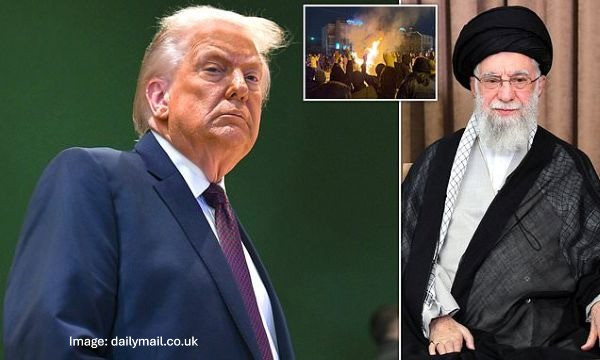

With something like one third of the naval forces of the United States deployed within striking distance of Iran a war to overthrow the Islamic Republic and eliminate its theocratic leadership seems imminent. But we’ve been here before, and what happens after the strike has always given American policymakers pause.
President Donald Trump issued a two-week ultimatum to Iran, as the USS Gerald Ford Carrier Strike Group arrived to emphasize the President’s deadline. This deployment, the largest since 2003, signals a major U.S. military escalation in the Middle East.
Yet, unlike the clear succession path in Venezuela, where the Vice President became the de facto leader after the capture of international outlaw President Nicholas Maduro, Iran’s Supreme Leader Ayatollah Ali Khamenei has no single clear successor.
Although it calls itself an Islamic “Republic” there is very little that is democratic about the selection of the country’s leadership – it is all a complex maze of religious and political councils and committees. None of which are democratically elected.
According to the Islamic Republic’s constitution, if the supreme leader dies, is impeached, or becomes incapacitated, a temporary council takes over his duties until the Assembly of Experts finds a replacement. This council includes the president, the chief justice, and one of the six clerics of the Guardian Council, whom the Expediency Council selects. The Expediency Council’s thirty-three members, by law, include the president, the chief justice, and the six clerics of the Guardian Council. This incestuousness is purposeful, noted Shay Khatiri in an article for the Middle East Forum.
By stacking all of the committees and councils with hardliners Khamenei has safeguarded the regime so that the hardline Qom clergy and the security establishment will remain dominant after his death.
Mr. Khatiri suggests that regime alteration in Iran requires elevating a figure such as reformist Ayatollah Javad Alavi Boroujerdi to the supreme leadership, but the U.S. government has little leverage over Iran’s power brokers. Washington’s only leverage over the Islamic Republic is the lives of the power brokers in the security and clerical establishments.
Assassinating too many senior officeholders risks a military dictatorship. Assassinating too many military commanders risks disintegration. Assassinating Khamenei and leaving the rest of the regime intact risks preserving it in its current form, and leaving the leadership intact will embolden Khamenei, who equates survival with victory, concluded Mr. Khatiri.
The Left-leaning news site Axios is reporting that Joint Chiefs Chairman Gen. Dan Caine has been advising President Trump and top officials that a military campaign against Iran could carry significant risks, in particular the possibility of becoming entangled in a prolonged conflict.
The President's trusted envoys Jared Kushner and Steve Witkoff have been urging the president to hold off and give diplomacy a chance.
Witkoff and Kushner are planning to meet Iranian Foreign Minister Abbas Araghchi on today in Geneva.
Axios claims both have advised Trump that time is on his side and that his hand will get stronger with every day that passes.
Their message is that Trump should see what he can get from the Iranians, and pull the trigger if and when he decides diplomacy has lost momentum.
An unnamed source Axios claims has knowledge of the President’s thinking said Trump has been leaning towards launching a strike for several days, but agreed to give Witkoff and Kushner a bit more time for negotiations. Another source said Trump insisted on more negotiations by Witkoff and Kushner because he wants to make sure all avenues are "exhausted."
Axios claims one source described General Caine as a "reluctant warrior" on Iran. Caine sees the stakes of a major operation in Iran as higher, with a greater risk for entanglement and American casualties, the two sources said.
One source said Caine was not advocating for a strike but will support and execute on any decision Trump makes.
Another source with direct knowledge of Caine's thinking said the chairman is not skeptical about a military campaign but "clear-eyed and realistic" about the chances for success and about what could come next after war starts. A senior official also denied Caine had expressed skepticism.
So, is war with Iran inevitable?
Unfortunately, the answer is YES because in matters of war and peace the enemy always has a vote.
Whether we admit it or accept it the Islamic Republic of Iran declared war on the United States in 1979, here are a few examples:
Everyone who is realistic about the now 47-year-old war Iran’s theocratic regime declared on America knows that regime change is the only way to permanently stop Iran’s drive to acquire nuclear weapons. However, preselecting a successor to the existing order without the input of the Iranian people would appear to be counter to the narrative that we are acting to free the Iranian people from their terrorist oppressors.
The weakness of Iran’s system of Wilayat al-Faqih has never been more obvious and the opportunity to undermine it from within rarely greater. If we want to end the threat of a nuclear-armed Iran, the time to decapitate the Iranian theocracy and replace it with something else created by the Iranian people is now.
George Rasley is editor of Richard Viguerie's ConservativeHQ.com and is a veteran of over 300 political campaigns. A member of American MENSA, he served on the staff of Vice President Dan Quayle, as Director of Policy and Communication for former Congressman Adam Putnam (FL-12) then Vice Chairman of the Oversight and Government Reform Committee's Subcommittee on National Security and Foreign Affairs, and as spokesman for retired Rep. Mac Thornberry formerly a member of the House Intelligence Committee and Chairman of the House Armed Services Committee.
President Donald Trump issued a two-week ultimatum to Iran, as the USS Gerald Ford Carrier Strike Group arrived to emphasize the President’s deadline. This deployment, the largest since 2003, signals a major U.S. military escalation in the Middle East.
Yet, unlike the clear succession path in Venezuela, where the Vice President became the de facto leader after the capture of international outlaw President Nicholas Maduro, Iran’s Supreme Leader Ayatollah Ali Khamenei has no single clear successor.
Although it calls itself an Islamic “Republic” there is very little that is democratic about the selection of the country’s leadership – it is all a complex maze of religious and political councils and committees. None of which are democratically elected.
According to the Islamic Republic’s constitution, if the supreme leader dies, is impeached, or becomes incapacitated, a temporary council takes over his duties until the Assembly of Experts finds a replacement. This council includes the president, the chief justice, and one of the six clerics of the Guardian Council, whom the Expediency Council selects. The Expediency Council’s thirty-three members, by law, include the president, the chief justice, and the six clerics of the Guardian Council. This incestuousness is purposeful, noted Shay Khatiri in an article for the Middle East Forum.
By stacking all of the committees and councils with hardliners Khamenei has safeguarded the regime so that the hardline Qom clergy and the security establishment will remain dominant after his death.
Mr. Khatiri suggests that regime alteration in Iran requires elevating a figure such as reformist Ayatollah Javad Alavi Boroujerdi to the supreme leadership, but the U.S. government has little leverage over Iran’s power brokers. Washington’s only leverage over the Islamic Republic is the lives of the power brokers in the security and clerical establishments.
Assassinating too many senior officeholders risks a military dictatorship. Assassinating too many military commanders risks disintegration. Assassinating Khamenei and leaving the rest of the regime intact risks preserving it in its current form, and leaving the leadership intact will embolden Khamenei, who equates survival with victory, concluded Mr. Khatiri.
The Left-leaning news site Axios is reporting that Joint Chiefs Chairman Gen. Dan Caine has been advising President Trump and top officials that a military campaign against Iran could carry significant risks, in particular the possibility of becoming entangled in a prolonged conflict.
The President's trusted envoys Jared Kushner and Steve Witkoff have been urging the president to hold off and give diplomacy a chance.
Witkoff and Kushner are planning to meet Iranian Foreign Minister Abbas Araghchi on today in Geneva.
Axios claims both have advised Trump that time is on his side and that his hand will get stronger with every day that passes.
Their message is that Trump should see what he can get from the Iranians, and pull the trigger if and when he decides diplomacy has lost momentum.
An unnamed source Axios claims has knowledge of the President’s thinking said Trump has been leaning towards launching a strike for several days, but agreed to give Witkoff and Kushner a bit more time for negotiations. Another source said Trump insisted on more negotiations by Witkoff and Kushner because he wants to make sure all avenues are "exhausted."
Axios claims one source described General Caine as a "reluctant warrior" on Iran. Caine sees the stakes of a major operation in Iran as higher, with a greater risk for entanglement and American casualties, the two sources said.
One source said Caine was not advocating for a strike but will support and execute on any decision Trump makes.
Another source with direct knowledge of Caine's thinking said the chairman is not skeptical about a military campaign but "clear-eyed and realistic" about the chances for success and about what could come next after war starts. A senior official also denied Caine had expressed skepticism.
So, is war with Iran inevitable?
Unfortunately, the answer is YES because in matters of war and peace the enemy always has a vote.
Whether we admit it or accept it the Islamic Republic of Iran declared war on the United States in 1979, here are a few examples:
- The Teheran Embassy hostage taking (1979)
- Hostage taking in Lebanon (1982 - 1992)
- The Beirut Marine Barracks and U.S. Embassy bombings (1983)
- Pan Am Flight 103 destroyed over Lockerbie, Scotland (1988)
- Mining the Persian Gulf and harassment of shipping (1988)
- Truck bombing at the Khobar Towers in Dhahran, Saudi Arabia (1996)
- Provided material support to the 9/11 hijackers (2000 – 2001)
- Iranians Charged with Cyber Plots Against U.S. Banks, Dam (2016)
- Iranian Spy Ring, Ahmadreza Doostar and Majid Ghorbani, Indicted for spying in the United States (2018)
- Ongoing assassinations and attacks on U.S. interests, including terror plots right here in the United States
- Ongoing supplying anti-American forces in Iraq and Afghanistan with training, sophisticated improvised explosive devices (IEDs) and explosively formed projectiles (EFPs) and other weapons
Everyone who is realistic about the now 47-year-old war Iran’s theocratic regime declared on America knows that regime change is the only way to permanently stop Iran’s drive to acquire nuclear weapons. However, preselecting a successor to the existing order without the input of the Iranian people would appear to be counter to the narrative that we are acting to free the Iranian people from their terrorist oppressors.
The weakness of Iran’s system of Wilayat al-Faqih has never been more obvious and the opportunity to undermine it from within rarely greater. If we want to end the threat of a nuclear-armed Iran, the time to decapitate the Iranian theocracy and replace it with something else created by the Iranian people is now.
George Rasley is editor of Richard Viguerie's ConservativeHQ.com and is a veteran of over 300 political campaigns. A member of American MENSA, he served on the staff of Vice President Dan Quayle, as Director of Policy and Communication for former Congressman Adam Putnam (FL-12) then Vice Chairman of the Oversight and Government Reform Committee's Subcommittee on National Security and Foreign Affairs, and as spokesman for retired Rep. Mac Thornberry formerly a member of the House Intelligence Committee and Chairman of the House Armed Services Committee.