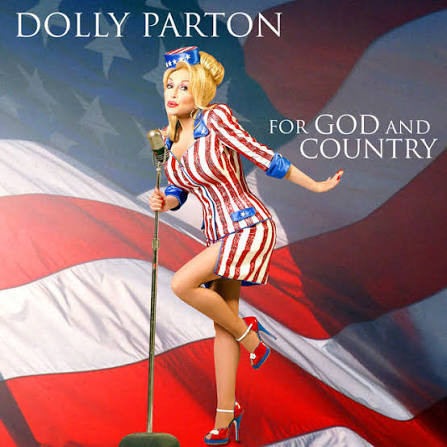

The world is crying out in sadness as the gloomy news of Dolly Parton’s demise, at the age of 80, has sunk in. She was often referred to as the “Queen of Country Music” but that does not do her justice. She was much, much more than that.
Born into poverty in the mountains of East Tennessee in 1948, the fourth of twelve children, Parton rose to become one of the most successful entertainers and entrepreneurs in American history. Her father, Robert Lee Parton, was illiterate, yet was later a sharecropper, tobacco farm owner, and construction worker. Dolly’s mother, Avie, cared for her twelve children as best she could. Both parents have often been cited as an inspiration to Dolly’s worldview and her songs often reflected that inspiration.
How poor was Dolly? Two parents and twelve children lived in a one room cabin covered with old newspapers because they could not afford true wallpaper. They had chicken for Thanksgiving instead of turkey. Gifts for Christmas? They were rare.
In “Coat of Many Colors,” Parton tells the story of her mother, who often read the Bible to Dolly, making her a coat from scraps of fabric because the family could not afford a new one. Other children mocked her because of her poverty, but Parton does not remember the coat as a symbol of shame. Instead, she sees it as a priceless expression of her mother’s love. “… that one is only poor only if they choose to be,” it says. The song illustrates a distinctly Christian idea; a person’s value does not come from possessions or social status.
Yet her success did not lead her to forget the people or values of her childhood. Instead, she used the opportunity---created by a free economy---to build wealth, create jobs, and develop businesses, while repeatedly using that wealth to serve others. Her songs and charitable work reveal a philosophy centered on hard work, gratitude, compassion, and her Christian faith. She sings, also in “Coat of Many Colors,” “I know we had no money,” but the song does not portray poverty as something that makes a person worthless.
Faith was also central to Parton’s music. In “The Seeker,” she describes herself as “a seeker,” expressing her desire for spiritual guidance and a relationship with God. In “He’s Alive,” she celebrates the Christian belief in the resurrection of Jesus. “He's alive, yes he's alive! Yes, he's alive and I'm forgiven! Heaven's gates are open wide!” These songs demonstrate that Parton’s success has always existed alongside a strong Christian identity. Her faith helped shape the idea that blessings should not simply be accumulated for personal pleasure but should also be used to help other people. “Hallelujah, he’s alive.”
Parton’s charitable work provides perhaps the strongest evidence of her commitment to Christian principles. Inspired partly by her father’s inability to read and write, she created the Dolly Parton’s Imagination Library, which has so far provided 200 million free books to young children. What began as a local effort in Tennessee became an international literacy program. Rather than merely speaking about helping poor families, Parton used her own resources to create an institution that gave children access to education regardless of their family's economic circumstances.
Her philanthropy has also extended to disaster relief, education, medical research, and her Appalachian community. After the 2016 wildfires in Tennessee, Parton established the My People Fund, which provided financial assistance to families who had lost their homes. It didn’t end there; she once endowed a poor black neighborhood in Tennessee to the tune of millions. Her charitable efforts demonstrate an important principle: wealth can be used not only for consumption but also for service.
In this sense, Dolly Parton stands as a powerful example of a distinctly American ideal: work hard, create something valuable, succeed in a free society, and remember that whatever blessings you receive can be used to bless someone else.
It is impossible to imagine Parton thriving in a socialist or communist state. Those in corrupt power would have consigned her to a gulag, taken her music and her money to enrich themselves. Her Christian faith would of course be outlawed, just as it had been in the old Soviet Union. In such a corrupt system, we never would have known, or celebrated---or loved Dolly Parton.
Her magnificent life of a devoted Christian who believed in everlasting life as well as her embrace of the free market to not only enrich herself but others, stands as an indictment of the silly (and yes, dangerous) prattling of socialists like Hassan Piker, a reprobate with no real accomplishments except to destroy.
This is the great moral fight of our times and all time. The right for people to live their lives as they wish, to practice their Christian faith as they wish, or to surrender the liberties we enjoy to the collectivist state, and wonder for the rest of our days what happened to our personal freedoms, our livelihood and our country.
Dolly Parton, RIP. A great entertainer. A great philanthropist. A great Christian. A great Exceptional American.
Craig Shirley is a Reagan biographer and presidential historian. His new book, Upheaval---about the 2024 Trump campaign--- is due out in January of 2027.