
When some picture "Wall Street," they picture financial fortune tellers: people who can predict the futures of stocks to win, or lose, or people who are able to read tea leaves. They picture the Oracle of Delphi of the modern world. People who reach Wall Street make it. "If you make it there, you can make it anywhere," sang Frank Sinatra of New York City.
Wall Street is anything but the mystical, mythological prophets. They're scum, they're villains, they're manipulators. The Wolf of Wall Street shouldn't be called a wolf because of Jordan Belfort's aggressive tactics, but because he was a wolf in sheep's clothing. He's aggressive not for tactics but because of violence.
An actor who became a longtime investor once said he never saw such criminality as he saw on Wall Street.
This isn't a new issue. In fact, Wall Street has been more of a thorn than a rose through most of history.
Wall Street Crash of 1929
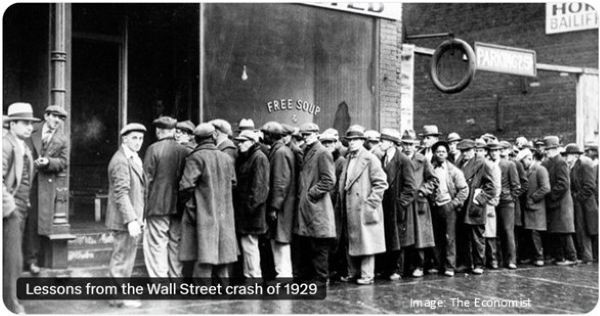
The Wall Street Crash of 1929 was one of the prongs that jumpstarted the worst economic crisis in the modern world: the Great Depression. By 1929, much of the stock market boom was being fueled by margin buying, which means investors could borrow up to 90% of a stock’s value to purchase it. At its peak, brokers had extended over $8.5 billion in margin loans, more than the total U.S. currency in circulation at the time. When the market began to fall, margin calls forced massive sales, triggering the crash of October 1929. “Speculation is the parasite of the industrial world," said Supreme Court Justice Louis Brandeis.
Senator Bernie Sanders, who is no friend of any free marketer, gets it right in this case: "Wall Street has enormous power over the Republican Party, enormous power over the Democratic Party," he said in 2013.
Soon after the crash, the Pecora Commission in 1932 revealed that many banks and brokerages were deeply entangled in self-dealing. Inside trading still exists today, and one could argue without exaggeration, that it is the second oldest profession.
The 1980 Buyouts
In the 1980s, leveraged buyouts became the norm Wall Street activity. Corporatists would buy underperforming companies, load them with debt, strip assets, and extract value, often leading to massive layoffs or bankruptcy. The idea of leveraged buyout became popular after former U.S. Secretary of the Treasury William E. Simon and others bought a greeting card company in 1982, and soon after Simon personally made nearly $70 million. The initial cost of buying this company was $80 million, but only $1 million was contributed by investors. The rest was bought with leverage, or borrowed money. And the worst part? It worked.
To quote the movie Wall Street, which was inspired by this immoral activity: "Greed is good."
The 2008 Recession
One of the more recent examples: banks and Big Money companies, including Wall Street, had strong ties to Washington. Regulatory deregulatory initiatives, weakened oversight, and favorable treatment after the crisis are frequently linked to lobbying power. The mortgage-lending was considered "too big to fail." And when it did, it caused massive issues for every single American. Surprise, the rich fooled the average hardworker. It's a tale as old as time.
And that's not even touching the multi-century, multi-generational issue of lobbyists and political influence. Wall Street is rich, and corrupt politicians follow the money like a stench follows the skunk. A century earlier, Andrew Jackson stated, “I have always been afraid of banks.”
When George W. Bush said the market was failing in 2008 and required state intervention, he was a fool. He was naive. He was the very thing he claimed to destroy. He bailed out Wall Street for billions of dollars, yet not one stockbroker or Wall Street operator or their company was ever investigated, tried or convicted though they caused billions of dollars of damage to honest Americans.
There is an old adage which goes, “When the elephants are fighting, the mice are at risk but when the elephants are making love, the mice aren’t much safer.” We mice have been victimized too often by the criminality of Wall Street.
Wall Street should be called Slum Street.
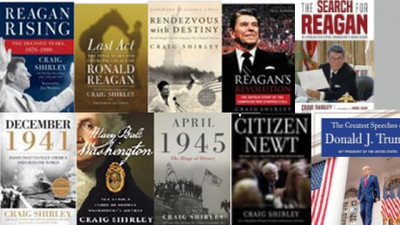
Historian and Reagan biographer Craig Shirley is the author of Reagan's Revolution: The Untold Story of the Campaign That Started It All; Rendezvous with Destiny: Ronald Reagan and the Campaign That Changed America; December 1941: 31 Days That Changed America and Saved the World; Last Act: The Final Years and Emerging Legacy of Ronald Reagan; Reagan Rising: The Decisive Years, 1976-1980; Citizen Newt: The Making of a Reagan Conservative; Mary Ball Washington: The Untold Story of George Washington's Mother; April 1945: The Hinge of History, as well as many articles and essays on politics and the conservative movement.
Wall Street is anything but the mystical, mythological prophets. They're scum, they're villains, they're manipulators. The Wolf of Wall Street shouldn't be called a wolf because of Jordan Belfort's aggressive tactics, but because he was a wolf in sheep's clothing. He's aggressive not for tactics but because of violence.
An actor who became a longtime investor once said he never saw such criminality as he saw on Wall Street.
This isn't a new issue. In fact, Wall Street has been more of a thorn than a rose through most of history.
Wall Street Crash of 1929
The Wall Street Crash of 1929 was one of the prongs that jumpstarted the worst economic crisis in the modern world: the Great Depression. By 1929, much of the stock market boom was being fueled by margin buying, which means investors could borrow up to 90% of a stock’s value to purchase it. At its peak, brokers had extended over $8.5 billion in margin loans, more than the total U.S. currency in circulation at the time. When the market began to fall, margin calls forced massive sales, triggering the crash of October 1929. “Speculation is the parasite of the industrial world," said Supreme Court Justice Louis Brandeis.
Senator Bernie Sanders, who is no friend of any free marketer, gets it right in this case: "Wall Street has enormous power over the Republican Party, enormous power over the Democratic Party," he said in 2013.
Soon after the crash, the Pecora Commission in 1932 revealed that many banks and brokerages were deeply entangled in self-dealing. Inside trading still exists today, and one could argue without exaggeration, that it is the second oldest profession.
The 1980 Buyouts
In the 1980s, leveraged buyouts became the norm Wall Street activity. Corporatists would buy underperforming companies, load them with debt, strip assets, and extract value, often leading to massive layoffs or bankruptcy. The idea of leveraged buyout became popular after former U.S. Secretary of the Treasury William E. Simon and others bought a greeting card company in 1982, and soon after Simon personally made nearly $70 million. The initial cost of buying this company was $80 million, but only $1 million was contributed by investors. The rest was bought with leverage, or borrowed money. And the worst part? It worked.
To quote the movie Wall Street, which was inspired by this immoral activity: "Greed is good."
The 2008 Recession
One of the more recent examples: banks and Big Money companies, including Wall Street, had strong ties to Washington. Regulatory deregulatory initiatives, weakened oversight, and favorable treatment after the crisis are frequently linked to lobbying power. The mortgage-lending was considered "too big to fail." And when it did, it caused massive issues for every single American. Surprise, the rich fooled the average hardworker. It's a tale as old as time.
And that's not even touching the multi-century, multi-generational issue of lobbyists and political influence. Wall Street is rich, and corrupt politicians follow the money like a stench follows the skunk. A century earlier, Andrew Jackson stated, “I have always been afraid of banks.”
When George W. Bush said the market was failing in 2008 and required state intervention, he was a fool. He was naive. He was the very thing he claimed to destroy. He bailed out Wall Street for billions of dollars, yet not one stockbroker or Wall Street operator or their company was ever investigated, tried or convicted though they caused billions of dollars of damage to honest Americans.
There is an old adage which goes, “When the elephants are fighting, the mice are at risk but when the elephants are making love, the mice aren’t much safer.” We mice have been victimized too often by the criminality of Wall Street.
Wall Street should be called Slum Street.
Historian and Reagan biographer Craig Shirley is the author of Reagan's Revolution: The Untold Story of the Campaign That Started It All; Rendezvous with Destiny: Ronald Reagan and the Campaign That Changed America; December 1941: 31 Days That Changed America and Saved the World; Last Act: The Final Years and Emerging Legacy of Ronald Reagan; Reagan Rising: The Decisive Years, 1976-1980; Citizen Newt: The Making of a Reagan Conservative; Mary Ball Washington: The Untold Story of George Washington's Mother; April 1945: The Hinge of History, as well as many articles and essays on politics and the conservative movement.