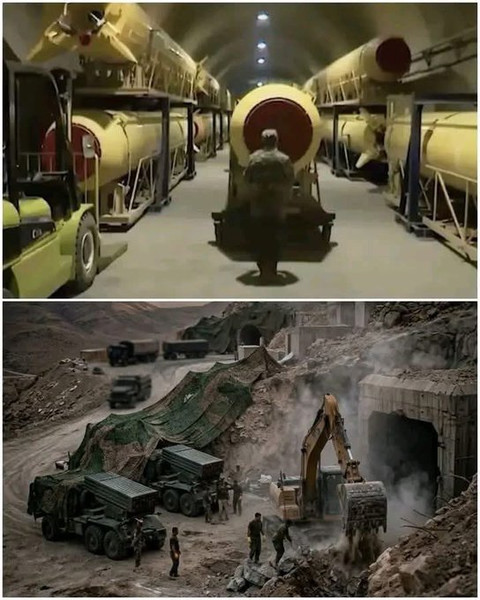

President Trump has been touting the near annihilation of Iran's arsenal, and has lately said the rest of its launch sites could be taken out in a day if he gave the order. However, the Iranians have been utilizing basic construction equipment to dig out several missile launchers and reopen subterranean tunnels tied to its missile program.
"Iran has repaired other parts of the bases as well, including roads that the US and Israel bombed to prevent missile launchers from using them," CNN wrote last week. "Satellite images show almost all these craters have now been filled, and at two sites, even repaved."
Sam Lair, a research associate at the James Martin Center for Nonproliferation Studies, recently highlighted the limits of American success in the war to prevent Iran from acquiring nuclear weapons.
"There’s nothing to prevent the launchers from being armed with the ample stockpile of missiles that the Iranians still have," Mr. Lair wrote in a report quoted by our friends at Zero Hedge.
“The US military is good at delivering tactical successes, and entombing and suppressing the Iranian missile force is a great example of that,” said Lair. “However, if that isn’t accompanied by a set of reasonable strategic war aims and an achievable theory of victory, it can end up being a strategic failure.”
And over the weekend the Iranians demonstrated the extent to which their efforts during the so-called ceasefire have restored their ballistic missile capabilities:
First wave: Launched from Kermanshah.
Second wave: Launched from Kermanshah.
Third wave: Launched from Urmia.
Fourth wave: Ballistic missiles has been launched from Tabriz, northwestern Iran against Israel.
Fifth wave: Ballistic missiles launched from Iran against Israel.
Sixth wave: Ballistic missiles launched from Qom, central Iran, towards Israel.
As CHQ contributor Frank Gaffney observed in a recent column, diplomacy with sharia-supremacists only produces hudnas – temporary pauses that allow them to rearm.
Only by decisively defeating that terrorist regime is there any prospect of an actual end to the Iran conflict, as opposed to a hudna – Islam’s cynical use of so-called ceasefires to regroup, rearm and then reengage under more favorable circumstances.
What does the decisive defeat of the Islamic Republic of Iran look like?
To use a term that President Trump himself has appeared to disavow, it looks like regime change.
Despite breathless reporting by the western media, the Islamic Republic’s leaders show no signs of surrendering. Indeed, they are portraying the current conflict with the United States and Israel as part of a continuous “hybrid war” waged by the Islamic Republic since the 1979 revolution—and using it as an excuse to repress domestic dissent and intimidate its neighbors.
And the “intimidate its neighbors” part of the Islamic Republic’s negotiating strategy seems to be working since they appear to be the loudest voices calling on the United States to reduce its demands to something far short of the total capitulation that our military success would allow us to impose on the Ayatollahs if we chose to do so.
So, what’s the bottom line?
From our perspective of 50-years of studying Iran’s Shia Twelver revolutionary government and working on national security matters one thing is quite clear to us; no Iranian Twelver is ever going to surrender on our terms.
To do so would involve not only violating the Islamic Republic’s political values, as expressed in their constitution and the governing principles of Khomeinism, or “Absolute Wilayat al-Faqih” (Guardianship of the Jurist), it would also violate the core religious principles of Shia Islam, namely that by spreading war and chaos the return of the hidden Twelfth Imam will be hastened and an Armageddon-like conflict will bring about the worldwide rule of Shia Islam.
Killing General Qasem Soleimani, Supreme Leader Ayatollah Ali Khamenei, secretary of the Supreme National Security Council Ali Larijani, Defense Minister Aziz Nasirzadeh, Army Chief of Staff Abdul Rahim Mousavi, Intelligence Minister Esmail Khatib, commander of Iran's Basij paramilitary force Gholamreza Soleimani, and others, does not defeat the Islamic Republic of Iran’s ideology of Wilayat al-Faqih.
This ideology, based on Shia “Twelver” Islam, is the motivating force behind Iran’s drive to acquire a nuclear weapon and to sow terror and chaos across the world. Killing Iran’s leaders does not defeat this ideology because another adherent of Wilayat al-Faqih will step up to take their place.
It is obvious to us, but maybe not to the President’s team, that a 60-day ceasefire is merely a hiatus in the “hybrid war” waged against us by the Islamic Republic ever since the 1979 revolution. In the near term the Ayatollahs will give up only the minimum necessary for the regime to survive, in the long term, they have every intention of continuing their war against the United States and Israel, because it is the entire reason for the existence of the Islamic Republic.
Failing to defeat the Taliban’s ideology of Sharia-supremacism is why Afghanistan’s former government was quickly defeated after Joe Biden precipitously withdrew our forces. So, we can kill Iranian leaders down to the point that sergeants are running the army and the clerks are running the government and they are not going to change their goal of acquiring nuclear weapons and their stated policy of death to the two Satans, the United States and Israel, because we have not defeated the ideology that motivates them.
Defeating and replacing the ideology of Wilayat al-Faqih is a necessary condition of “winning” the war and achieving a lasting peace with a new Iran. Until a truly secular government made up of Wester-oriented Iranians committed to peace is in place the war the Islamic Republic declared 47 years ago on America and the West will continue.
George Rasley is editor of Richard Viguerie's ConservativeHQ.com. A veteran of over 300 political campaigns, he served as a staff member, consultant or advance representative for some of America’s most recognized conservative political figures, including President Ronald Reagan, Senator Jesse Helms, Governor Sarah Palin and Representative Jack Kemp. A member of American MENSA, he served on the House and Senate staff and on the staff of Vice President Dan Quayle. Rasley is a graduate of Hanover College and studied international affairs at Oxford University's Worcester College. Rasley has lived, worked and travelled extensively in the Muslim world, including staffing Vice President Quayle on official visits to Saudi Arabia and Indonesia.
"Iran has repaired other parts of the bases as well, including roads that the US and Israel bombed to prevent missile launchers from using them," CNN wrote last week. "Satellite images show almost all these craters have now been filled, and at two sites, even repaved."
Sam Lair, a research associate at the James Martin Center for Nonproliferation Studies, recently highlighted the limits of American success in the war to prevent Iran from acquiring nuclear weapons.
"There’s nothing to prevent the launchers from being armed with the ample stockpile of missiles that the Iranians still have," Mr. Lair wrote in a report quoted by our friends at Zero Hedge.
“The US military is good at delivering tactical successes, and entombing and suppressing the Iranian missile force is a great example of that,” said Lair. “However, if that isn’t accompanied by a set of reasonable strategic war aims and an achievable theory of victory, it can end up being a strategic failure.”
And over the weekend the Iranians demonstrated the extent to which their efforts during the so-called ceasefire have restored their ballistic missile capabilities:
First wave: Launched from Kermanshah.
Second wave: Launched from Kermanshah.
Third wave: Launched from Urmia.
Fourth wave: Ballistic missiles has been launched from Tabriz, northwestern Iran against Israel.
Fifth wave: Ballistic missiles launched from Iran against Israel.
Sixth wave: Ballistic missiles launched from Qom, central Iran, towards Israel.
As CHQ contributor Frank Gaffney observed in a recent column, diplomacy with sharia-supremacists only produces hudnas – temporary pauses that allow them to rearm.
Only by decisively defeating that terrorist regime is there any prospect of an actual end to the Iran conflict, as opposed to a hudna – Islam’s cynical use of so-called ceasefires to regroup, rearm and then reengage under more favorable circumstances.
What does the decisive defeat of the Islamic Republic of Iran look like?
To use a term that President Trump himself has appeared to disavow, it looks like regime change.
Despite breathless reporting by the western media, the Islamic Republic’s leaders show no signs of surrendering. Indeed, they are portraying the current conflict with the United States and Israel as part of a continuous “hybrid war” waged by the Islamic Republic since the 1979 revolution—and using it as an excuse to repress domestic dissent and intimidate its neighbors.
And the “intimidate its neighbors” part of the Islamic Republic’s negotiating strategy seems to be working since they appear to be the loudest voices calling on the United States to reduce its demands to something far short of the total capitulation that our military success would allow us to impose on the Ayatollahs if we chose to do so.
So, what’s the bottom line?
From our perspective of 50-years of studying Iran’s Shia Twelver revolutionary government and working on national security matters one thing is quite clear to us; no Iranian Twelver is ever going to surrender on our terms.
To do so would involve not only violating the Islamic Republic’s political values, as expressed in their constitution and the governing principles of Khomeinism, or “Absolute Wilayat al-Faqih” (Guardianship of the Jurist), it would also violate the core religious principles of Shia Islam, namely that by spreading war and chaos the return of the hidden Twelfth Imam will be hastened and an Armageddon-like conflict will bring about the worldwide rule of Shia Islam.
Killing General Qasem Soleimani, Supreme Leader Ayatollah Ali Khamenei, secretary of the Supreme National Security Council Ali Larijani, Defense Minister Aziz Nasirzadeh, Army Chief of Staff Abdul Rahim Mousavi, Intelligence Minister Esmail Khatib, commander of Iran's Basij paramilitary force Gholamreza Soleimani, and others, does not defeat the Islamic Republic of Iran’s ideology of Wilayat al-Faqih.
This ideology, based on Shia “Twelver” Islam, is the motivating force behind Iran’s drive to acquire a nuclear weapon and to sow terror and chaos across the world. Killing Iran’s leaders does not defeat this ideology because another adherent of Wilayat al-Faqih will step up to take their place.
It is obvious to us, but maybe not to the President’s team, that a 60-day ceasefire is merely a hiatus in the “hybrid war” waged against us by the Islamic Republic ever since the 1979 revolution. In the near term the Ayatollahs will give up only the minimum necessary for the regime to survive, in the long term, they have every intention of continuing their war against the United States and Israel, because it is the entire reason for the existence of the Islamic Republic.
Failing to defeat the Taliban’s ideology of Sharia-supremacism is why Afghanistan’s former government was quickly defeated after Joe Biden precipitously withdrew our forces. So, we can kill Iranian leaders down to the point that sergeants are running the army and the clerks are running the government and they are not going to change their goal of acquiring nuclear weapons and their stated policy of death to the two Satans, the United States and Israel, because we have not defeated the ideology that motivates them.
Defeating and replacing the ideology of Wilayat al-Faqih is a necessary condition of “winning” the war and achieving a lasting peace with a new Iran. Until a truly secular government made up of Wester-oriented Iranians committed to peace is in place the war the Islamic Republic declared 47 years ago on America and the West will continue.
George Rasley is editor of Richard Viguerie's ConservativeHQ.com. A veteran of over 300 political campaigns, he served as a staff member, consultant or advance representative for some of America’s most recognized conservative political figures, including President Ronald Reagan, Senator Jesse Helms, Governor Sarah Palin and Representative Jack Kemp. A member of American MENSA, he served on the House and Senate staff and on the staff of Vice President Dan Quayle. Rasley is a graduate of Hanover College and studied international affairs at Oxford University's Worcester College. Rasley has lived, worked and travelled extensively in the Muslim world, including staffing Vice President Quayle on official visits to Saudi Arabia and Indonesia.