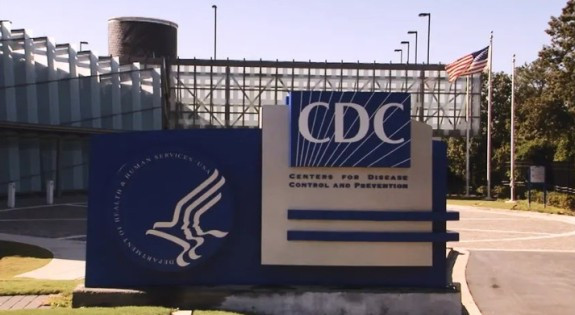

The NIH, FDA, and CDC form a finely tuned, well-hidden machine of corruption. In this article our friend Truth Monster John Anthony, (click here to subscribe to his must-read Substack) takes you behind the headlines to see how that machinery works.
The COVID vaccines were introduced in December 2020. Despite 5 years of overwhelming evidence to the contrary, 62% of Americans still believe the benefits outweigh the risks. Recently the FDA approved a flu virus using the same controversial mRNA platform even though flu shots have a long history of failure.
Why do people continue taking drugs that are proven, or at least suspected, of being mediocre and dangerous? The answer lies with the drug studies, but in researching the mechanisms, I discovered what may be the most corrupted institution in government.
Headline Role of the NIH, FDA, and CDC
Here is a simple overview of how these agencies interact.
1. When a CDC scientist invents a drug, they look for a pharmaceutical company (partner) to manufacture the product.
2. The partner purchases a license for the patent following NIH procedures.
3. The drug company then submits the drug to the FDA for approval. (For a pharma invented vaccine, start at step 3.)
4. Once approved, the CDC establishes usage guidelines and creates studies to show how the drug performs in the real world. (The main reason why absolute risk reduction must be used in studies.)
This looks fine, except there’s a lot more going on.
CDC’s All Important Studies
While investigating COVID vaccine studies, I kept seeing the same lead authors working for the CDC’s National Center for Immunization and Respiratory Diseases (NCIRD). What I found in that department was startling.
Among other activities, the NCIRD:
- Conducts and funds vaccine safety and efficacy research
- Monitors vaccine-preventable diseases
- Makes immunization recommendations through the Advisory Committee on Immunization Practices (ACIP)
- Manages the Vaccine Adverse Event Reporting System (VAERS)
- Runs the Vaccine Safety Datalink (VSD)
- Assists health departments in developing vaccine information management systems to identify children whose parents may have not complied with local vaccination laws.
Keeping these activities under one roof makes it easier to maintain efficiency and quality standards. Closer attention shows massive conflicts of interest.
The same agency that spends billions buying vaccines through the Vaccines for Children program is the one telling you they’re safe. They design the studies, decide which studies get funded, which get published, and which get buried. These studies can make or break a drug’s success.
After the vaccine is licensed it’s submitted to the Advisory Committee on Immunization Practices (ACIP), which decides who should receive it. Once in the marketplace, the CDC manages systems that monitor safety data. (This is the same data the CDC had to be sued before they would release this information.)
This is not quality control, it’s total control of drug clearance and what consumers are allowed to see.
But it gets worse.
Technology Transfer Office
When a CDC inventor creates a new drug, the agency shops it to pharmaceutical companies to find a buyer for the patent license so it can be manufactured.
This process is hidden behind the benign sounding Technology Transfer Office (TTO).
The CDC explains:
“The Centers for Disease Control and Prevention Technology Transfer Office (TTO) partners with industry, academia, non-profits, and other government agencies to transfer CDC’s research portfolio into products and services to improve public health.”
Sounds noble, but fails to mention TTO is staffed by the CDC and is the machinery that turns CDC’s mandates into private revenue streams. The TTO evaluates employee inventions, files patents, markets those patents to pharmaceutical companies, negotiates licensing deals, and manages the royalty streams.
What it means in practice is that CDC scientists — paid with your tax dollars — develop vaccine candidates, viral strains, adjuvants, and diagnostic assays in government labs, then the TTO shops those inventions to private pharmaceutical corporations who commercialize them for profit, with the government scientists getting a personal cut.
Something for Everyone
The list of CDC technologies available for licensing covers virtually every vaccine-preventable disease on the schedule: Rotavirus, RSV, Dengue, Rabies, HIV, TB, Influenza, Strep, Malaria, Anthrax, Lime Disease, and more.
It doesn’t stop with licensing vaccines. They also license delivery systems, adjuvants, assay methods, quality control processes.
If that’s not sufficient, the TTO offers 5 different licensing deal structures to suit whatever a pharmaceutical company wants.
Exclusive Licenses
Exclusive licenses are particularly significant. When the CDC grants an exclusive license to a vaccine technology, it's handing a government-funded invention to a single private entity that can then charge whatever the market will bear — with zero competition.
A Federal Register public comment period is posted, but consumers have a brief 15-day window to respond before taxpayer-funded invention becomes a private monopoly.
The money incentives don’t stop there!
CRADA
Beyond straight licensing, the TTO negotiates Cooperative Research and Development Agreements (CRADAs) . These are collaborative deals where CDC scientists and pharmaceutical company researchers work together on vaccine development. The company provides funding or resources; the CDC provides expertise, lab access, and biological materials. Any inventions that come out of a CRADA can be exclusively licensed to the corporate partner — and the CDC employees involved get their royalty share.
A CRADA essentially embeds pharma interests inside the CDC’s research agenda. The scientists working on these collaborations know their worth.
Their royalty payments depend on the commercial success of the resulting product. These are the same scientists whose research gets cited as “CDC studies show vaccines are safe.”
Inventers are Well-remunerated
Inventors receive the first $2000 from each license, another 15% of royalties up to $50,000, and 25% above $50,000.
Inventors are capped at a maximum of $150,000 in royalties annually. In February of 2026, Judicial Watch filed a lawsuit contending that there are workarounds to avoid the cap, and in some cases it is ignored.
Every time the ACIP adds a vaccine to the childhood schedule, every time a state mandates it for school entry, every time the federal government places a bulk order — that CDC employee’s royalty check grows.
There’s little incentive to reject a highly profitable vaccine, when studies can be easily manipulated to create the illusion of “safe and effective.”
The NCIRD’s Real Job
The CDC’s information ecosystem depends on studies that indicate the patents they are licensing create “safe and effective” vaccines. (Even though both are relative terms.)
CDC studies are designed by agency epidemiologists, subject matter experts, and appointed external research partners.
Because studies have so many variables savvy designers can often make a study imply the outcome they want.
Favorite tricks are to extend timelines, then average effective with ineffective years to create a false sense of long-term effectiveness; state results in more impressive relative risk ratios, rather than absolute risk reduction patients see in real world use; composite endpoints that lump together major (fatal heart attack) and lessor (hospitalization) outcomes which again creates the impression a drug is more effective than it is.
CDC’s statisticians and epidemiologists are undoubtedly good at their job. But that job is not what you think it is.
The job of the NCIRD is to create studies that make selected drugs look good even if that means, bending the study design to create the appearance of greater efficacy.
What About the NIH and FDA?
The NIH and the FDA are no less conflicted than the CDC. Each has their own Technology Transfer Professionals, closed loop processes, and millions in royalty revenue streams.
Over 1,000 licensed products developed from NIH technologies were on the market in FY 2024, yielding $210.6 million in royalty income.
In 2021 Judicial Watch filed a lawsuit on behalf of Open the Books wanting information on 59,000 royalty checks from NIH alone. So far they have gotten a runaround.
We do know that between 2010 and 2023 over $2.685 billion was paid to NIH institutes or scientists from pharmaceutical companies and other private entities licensing government-owned patents. Of that, more than $1 billion was marked specifically for inventors — meaning direct payments to individual government scientists.
By charging User Fees, the FDA receives nearly 50% of its funding from the pharmaceutical industry. The same pharmaceutical firms work with the FDA to create the performance measures for FDA to meet.
How Trustworthy are the Pharma Partners?
Pfizer, is a frequent partner…
- In 1992 Pfizer paid $215 million dollars because its Convexo-Concave heart valve fractured, eventually killing more than 600 people. A year later they paid the DOJ another $10.75 million for lying to get the mechanical valve approved. They lied.
- In 1996 Pfizer gave an experimental drug, Trovan to hundreds of Nigerian children, 11 died. Seems Pfizer forgot to mention Trovan was an experiment. It took 15 years, but the families got $175,000 each. (Oh! By the way. Pfizer hired investigators to dig up dirt on the Nigerian AG to avoid paying the families any money.) They lied.
- In 2010 Pfizer had to pay $142 million for racketeering charges for falsely marketing the epilepsy drug Neurontin. Of course this was a year after being hit with a $2.3 billion fine for falsely marketing Bextra “with an attempt to defraud or mislead.” They lied two more times.
Now consider Pfizer’s motto “We innovate every day to make the world a healthier place.” (Well, maybe some days.) The same company that stands to make billions from the sale of a drug and has a history of dishonesty, is the one that sets the performance measures to hold the FDA accountable.
Are Good Intentions Enough?
Even if every CDC employee was well-intentioned, the agency has fed into an enormous financial incentive system that begs to be abused.
This doesn’t mean the FDA never rejects dangerous drugs based on CDC studies. Examples are Bextra and Belviq that showed increased cardiovascular and cancer risks respectively. They also withdrew Hydroxychloroquine citing studies showing it ineffective and causing heart rhythms. The HCQ decision is a master class in why neither the FDA nor CDC can be trusted.
It does mean the CDC has broad incentives to take a mediocre drug with adverse effects and massage the studies to create the illusion it is “safe and effective”. CDC employees would not remain on staff long if they disclosed that the COVID-19 vaccines were neither safe nor effective or that hydroxychloroquine was a safe way to treat the virus.
Why So Many Still Believe Even Vaccine Failures Are Effective
The CDC alone produces up to 300 vaccine studies a year. In turn these are downloaded thousands of times; generate dozen’s of meta-analyses, experts’ interviews, and are reprinted in major association journals and bulletins. They make front page headlines, appear in tv ads, online, and make their way into the offices of doctors with little time to dig into studies’ details. The average person is confronted with nearly 100 drug advertisements a day. The reassuring message with hidden flaws is hard to escape.
The same agencies producing pro-vaccines studies bury those exposing their failures. The public is overwhelmingly left with a positive impression regardless of the integrity of the studies.
CDC is more than a health agency, it’s a money-making machine and the public is funding it with their wallets and health.
What can you do?
- Realize most doctors lack the time to research studies so they rely on the often-misleading headlines, abstracts, or conclusions.
- RFK, Jr. is attempting to reform HHS, but the headwinds and undermining make it nearly impossible for an appointee to radically change the system. Therefore it is best to question CDC studies.
- Never trust a single interpretation of a study. Look for alternate views. Especially those maligned by establishment sources.
- Every government study is not conflicted, nor is every contrarian position correct. It’s up to us to read both versions and make our own judgments.
Truth Monster John Anthony is a national speaker, researcher, founder of the Sustainable Freedom Lab, and an expert on HUD and property rights infringements click here to subscribe to his must-read Substack. The Truth Monster is a reader-supported publication. To receive new posts and support its work, consider becoming a free or paid subscriber.