
Right now, the United States finds itself in a peculiar position in its war to stop the Islamic Republic of Iran from acquitting nuclear weapons.
We and our Israeli allies have won a great tactical victory in Operation Epic Fury:
However, the larger strategic victory of removing the Islamic Republic of Iran’s nuclear weapons program has so far eluded us.
Now, after repeated false starts the White House claims some daylight in the discussions with the Islamic Republic’s latest group of “negotiators.”
What appears to have broken the stalemate on the Islamic Republic’s side was President Trump’s blockade of the Strait of Hormuz – a principal avenue for oil flowing to Europe and Asia, and also the foundation of the Islamic Republic of Iran’s economy.
The Epoch Times reported since President Trump imposed the blockade on April 13, at least 1.5 million barrels of Iranian oil have been stored every day because there’s no place to move it.
Those barrels are starting to pile up. According to consensus industry estimates, including by UK-based Energy Aspects, up to 68 million barrels of Iran’s 122-million-barrel maximum storage was full in late April, and there was space for 20 million to 30 million barrels more.
The squeeze is rattling Islamic Republic leaders, Trump said in an April 28 Truth Social post: “Iran has just informed us that they are in a ‘State of Collapse,’“ the president wrote. “They want us to ‘Open the Hormuz Strait,’ as soon as possible, as they try to figure out their leadership situation.”
Unless the U.S. Navy lifts its blockade, Iran cannot move oil and gas out of the country, putting the same squeeze on Tehran that it has imposed on its Gulf State neighbors since early March.
And the “shut-in clock” is ticking and running against the Islamic Republic.
When the storage clock expires, wells are capped—or shut in—rigs disassembled, field grids unplugged, refineries shut down, and men and machines idled. Restoring production to pre-shutdown capacity can take weeks or even months.
The longer that oil and gas infrastructure is offline and marginally manned, the more vulnerable it is to structural damage and, as Trump noted, the more prone it is to “explode” from unvented pressure.
The potential for long-term damage to Iran’s energy infrastructure during a shutdown is compounded by its “wax” oil, a heavy crude that can solidify and block wells and pipelines when it is not flowing.
“There is some anticipation that the need to shut-in producing wells and fields will cause damage to facilities, cause them to ‘explode,’ or permanently reduce Iran’s oil production capacity even if and when the blockade is eased,” Robin Mills, a fellow at the Center on Global Energy Policy, wrote.
Another potential threat to shut-in wells is water coning.
“When mature oil wells shut down, bottom water rushes in, a process called water coning,” Miad Maleki, Senior Fellow at the Foundation for the Defense of Democracy and a former Treasury-OFAC Executive, wrote on X.
“Oil droplets get permanently trapped in rock pores. This oil can never be recovered.
“Forced shut-ins could permanently destroy 300,000-500,000 [bpd] of production capacity, that’s [$9 billion to $15 billion per year] in revenue, gone forever.”
For his part, President Trump has said the blockade seems to be working and a deal to end the U.S.-Iran conflict appears to be on the horizon.
The Wall Street Journal just reported both sides are hammering out a memorandum laying the framework for month-long talks that could resume in Islamabad, Pakistan.
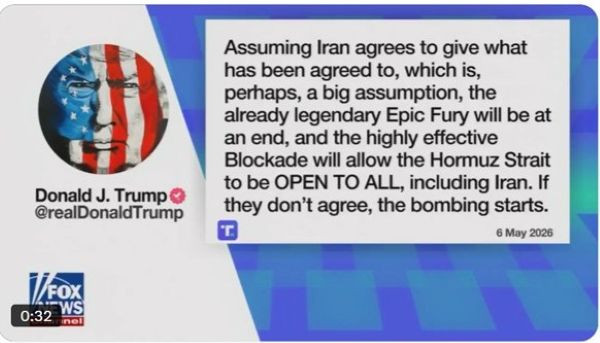
And to put some urgency behind the negotiations President Trump dropped the hammer on Truth Social: “If Iran gives what has already been agreed to, Operation Epic Fury ends and the Strait of Hormuz will be open to all — including Iran. If they don’t… the bombing starts.”
Fox News reported this morning that reports indicate the timeline for a response from the Iranian regime is now a matter of hours or days following a new U.S. proposal. The memorandum includes 14 separate points intended to create a total block of Iran's nuclear ambitions. "The timeline here is looking at a matter of hours or possibly days for the Iranians to respond to this American proposal, a memorandum, we are told, that includes 14 separate points."
We are skeptical that the Islamic Republic’s leadership can be trusted to surrender its nuclear weapons program, but through the blockade President Trump has masterfully flipped the script and taken away Iran’s ability to control the Strait of Hormuz – its economic lifeline. Although economic pressure has not worked in the past, Iran’s economy is now in free fall. If the Islamic Republic’s leaders are truly “desperate for a deal” then President Trump will have achieved the strategic victory that, despite our tactical success, has so far eluded us.
We and our Israeli allies have won a great tactical victory in Operation Epic Fury:
Iran’s ballistic missile arsenal and production capacity has been razed. More than 85% of the regime’s defense industrial base, including the majority of its ballistic missiles, launcher vehicles, and long-range attack drones, has been destroyed — eliminating its ability to project power and use these capabilities as a shield around their ultimate pursuit of nuclear weapons.
Iran’s air forces have been functionally neutered. Before Operation Epic Fury, the Iranian air force would fly between 30 to 100 flights each day; today, that number is zero.
Iran’s navy has been obliterated. 150 warships across 16 classes have been destroyed, every submarine has been sunk, and 97% of its once-massive inventory of naval mines have been eliminated.
Iran can no longer arm terrorist proxies. The majority of the regime’s offensive weapons are destroyed and the regime can no longer manufacture new terror weapons like ballistic missiles and long-range drones.
Iran’s once-vaunted space program has been devastated. 70% of its launch facilities and ground control stations have been destroyed or degraded, preventing the regime from using space for military purposes.
Iran’s air forces have been functionally neutered. Before Operation Epic Fury, the Iranian air force would fly between 30 to 100 flights each day; today, that number is zero.
Iran’s navy has been obliterated. 150 warships across 16 classes have been destroyed, every submarine has been sunk, and 97% of its once-massive inventory of naval mines have been eliminated.
Iran can no longer arm terrorist proxies. The majority of the regime’s offensive weapons are destroyed and the regime can no longer manufacture new terror weapons like ballistic missiles and long-range drones.
Iran’s once-vaunted space program has been devastated. 70% of its launch facilities and ground control stations have been destroyed or degraded, preventing the regime from using space for military purposes.
However, the larger strategic victory of removing the Islamic Republic of Iran’s nuclear weapons program has so far eluded us.
Now, after repeated false starts the White House claims some daylight in the discussions with the Islamic Republic’s latest group of “negotiators.”
What appears to have broken the stalemate on the Islamic Republic’s side was President Trump’s blockade of the Strait of Hormuz – a principal avenue for oil flowing to Europe and Asia, and also the foundation of the Islamic Republic of Iran’s economy.
The Epoch Times reported since President Trump imposed the blockade on April 13, at least 1.5 million barrels of Iranian oil have been stored every day because there’s no place to move it.
Those barrels are starting to pile up. According to consensus industry estimates, including by UK-based Energy Aspects, up to 68 million barrels of Iran’s 122-million-barrel maximum storage was full in late April, and there was space for 20 million to 30 million barrels more.
The squeeze is rattling Islamic Republic leaders, Trump said in an April 28 Truth Social post: “Iran has just informed us that they are in a ‘State of Collapse,’“ the president wrote. “They want us to ‘Open the Hormuz Strait,’ as soon as possible, as they try to figure out their leadership situation.”
Unless the U.S. Navy lifts its blockade, Iran cannot move oil and gas out of the country, putting the same squeeze on Tehran that it has imposed on its Gulf State neighbors since early March.
And the “shut-in clock” is ticking and running against the Islamic Republic.
When the storage clock expires, wells are capped—or shut in—rigs disassembled, field grids unplugged, refineries shut down, and men and machines idled. Restoring production to pre-shutdown capacity can take weeks or even months.
The longer that oil and gas infrastructure is offline and marginally manned, the more vulnerable it is to structural damage and, as Trump noted, the more prone it is to “explode” from unvented pressure.
The potential for long-term damage to Iran’s energy infrastructure during a shutdown is compounded by its “wax” oil, a heavy crude that can solidify and block wells and pipelines when it is not flowing.
“There is some anticipation that the need to shut-in producing wells and fields will cause damage to facilities, cause them to ‘explode,’ or permanently reduce Iran’s oil production capacity even if and when the blockade is eased,” Robin Mills, a fellow at the Center on Global Energy Policy, wrote.
Another potential threat to shut-in wells is water coning.
“When mature oil wells shut down, bottom water rushes in, a process called water coning,” Miad Maleki, Senior Fellow at the Foundation for the Defense of Democracy and a former Treasury-OFAC Executive, wrote on X.
“Oil droplets get permanently trapped in rock pores. This oil can never be recovered.
“Forced shut-ins could permanently destroy 300,000-500,000 [bpd] of production capacity, that’s [$9 billion to $15 billion per year] in revenue, gone forever.”
For his part, President Trump has said the blockade seems to be working and a deal to end the U.S.-Iran conflict appears to be on the horizon.
The Wall Street Journal just reported both sides are hammering out a memorandum laying the framework for month-long talks that could resume in Islamabad, Pakistan.
And to put some urgency behind the negotiations President Trump dropped the hammer on Truth Social: “If Iran gives what has already been agreed to, Operation Epic Fury ends and the Strait of Hormuz will be open to all — including Iran. If they don’t… the bombing starts.”
Fox News reported this morning that reports indicate the timeline for a response from the Iranian regime is now a matter of hours or days following a new U.S. proposal. The memorandum includes 14 separate points intended to create a total block of Iran's nuclear ambitions. "The timeline here is looking at a matter of hours or possibly days for the Iranians to respond to this American proposal, a memorandum, we are told, that includes 14 separate points."
We are skeptical that the Islamic Republic’s leadership can be trusted to surrender its nuclear weapons program, but through the blockade President Trump has masterfully flipped the script and taken away Iran’s ability to control the Strait of Hormuz – its economic lifeline. Although economic pressure has not worked in the past, Iran’s economy is now in free fall. If the Islamic Republic’s leaders are truly “desperate for a deal” then President Trump will have achieved the strategic victory that, despite our tactical success, has so far eluded us.